Studies of Insects
From the collection of Cleveland Museum of Art. Free to download, adapt and use — no permission needed.
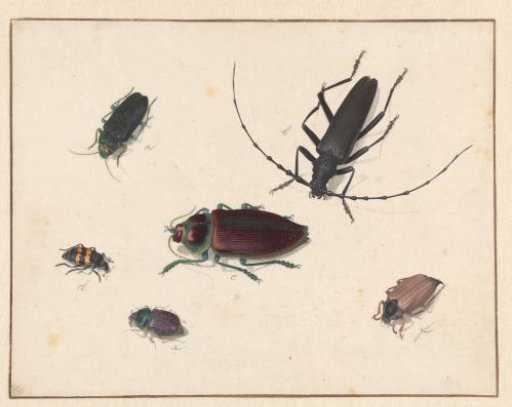
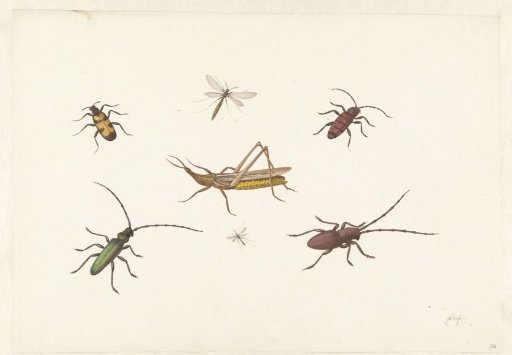
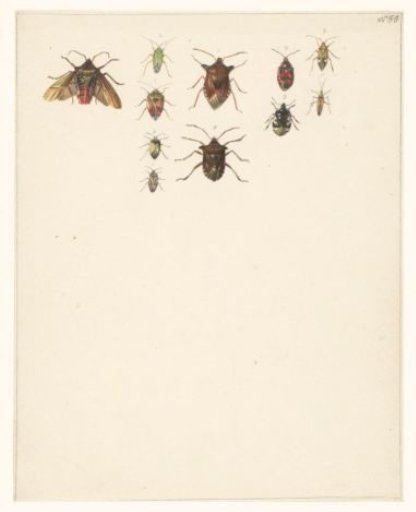
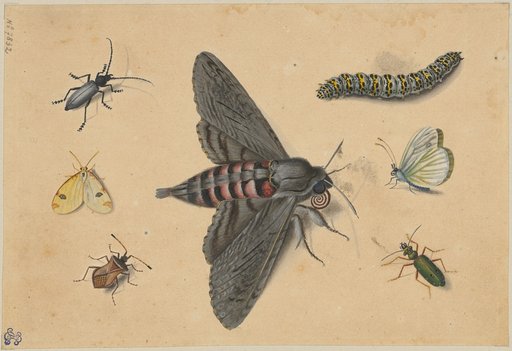
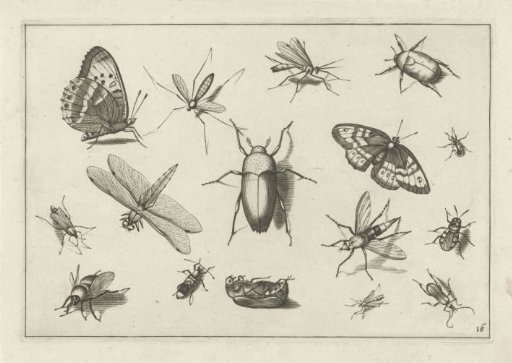
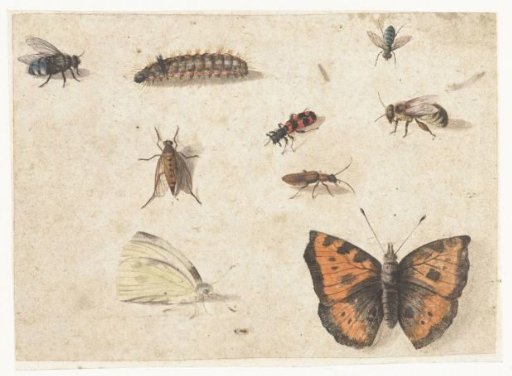
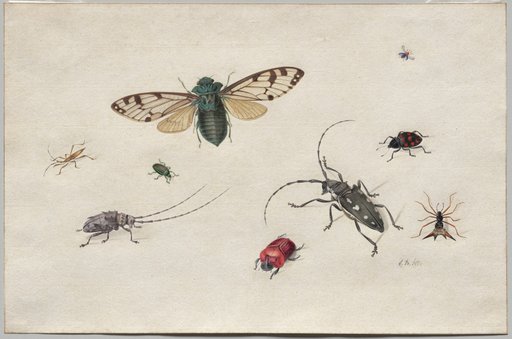
In the 17th century, an interest in flora and fauna, both local and exotic, in the Netherlands led to vast collections of insects, plants, and animals among academics and amateurs. Artists such as Johannes Bronckhorst became specialists at recording these collections in paint, to be kept in portfolios and shown to visitors. The grouping of insects on this sheet suggest that Bronckhorst had access to a varied collection, and include a cicada, a cereal-leaf beetle, a harlequin ladybird, a spiny orb-weaver spider, two Asian longhorn beetles, a red rhinoceros beetle, a rosemary beetle, and a stick insect. With great attention to detail, Bronckhorst may have selected this particular assembly with no other intent than to create a balanced and colorful composition.
Cleveland Museum of Art’s own description