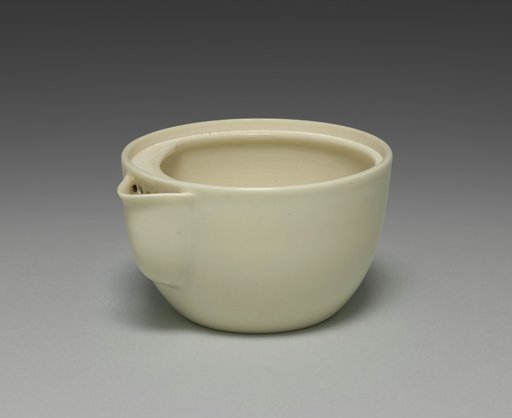
Hand-held Teapot
From the collection of Cleveland Museum of Art. Free to download, adapt and use — no permission needed.
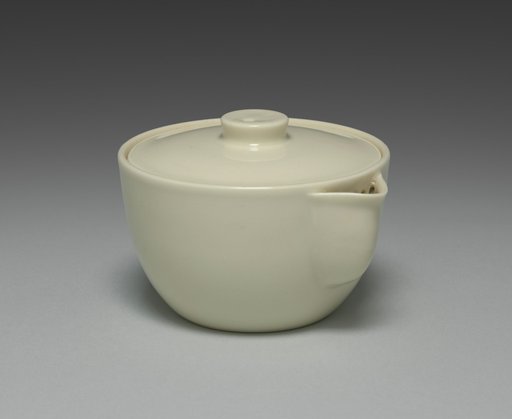
This teapot is of a variety used by advanced sencha practitioners. Called a hōhin , the pot is designed to be held directly by the fingers, with the body touching the upper part of the palm. This shape allows the host to manipulate the pot with a single hand and demonstrate dexterity. Direct contact between the ceramic body and the hand allows the host to closely gauge the temperature of the water within. There are differing grades of sencha , and for the finest one, gyokuro , the water temperature must be carefully regulated to achieve the proper flavor. This vessel is therefore efficacious for preparing this high-quality tea. The hōhin is also extremely portable, so it is well suited for impromptu gatherings. According to its box, this teapot is an example of taihakuji . “Great-white porcelain” was an important early invention Yohei III devised in 1972. It involved the combination of a distinctive translucent, creamy glaze over an ivory-colored clay body.
Cleveland Museum of Art’s own description