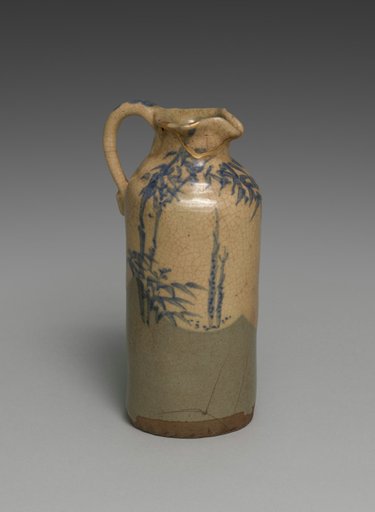
Sake Pourer with Bamboo
From the collection of Cleveland Museum of Art. Free to download, adapt and use — no permission needed.
This pair of sake pourers adorned with with bamboo and bellflowers is attributed to the founder of the Seifū Studio, Seifū Yohei I (1801–1861). Yohei I, the lineage founder, was born to the Yasuda family in the city of Kanazawa, which faces the Sea of Japan. His home province of Kaga (in present-day Ishikawa Prefecture) produced its own ceramics, known as Kutani ware, but for his training as a potter, Yohei I chose Kyoto, which produced the more technically advanced porcelainware. He moved to Kyoto around the 1820s and became apprenticed to Nin’ami Dohachi, a leading potter in the city. He later struck out on his own, and it is likely that his teacher gave him the name Seifu Yohei. His works include many exquisitely painted copies of Chinese porcelain, and he also produced stoneware with overglaze color enamels that emulated works in the style of Ogata Kenzan (1663–1743) at which his teacher excelled.
Cleveland Museum of Art’s own descriptionSimilar works
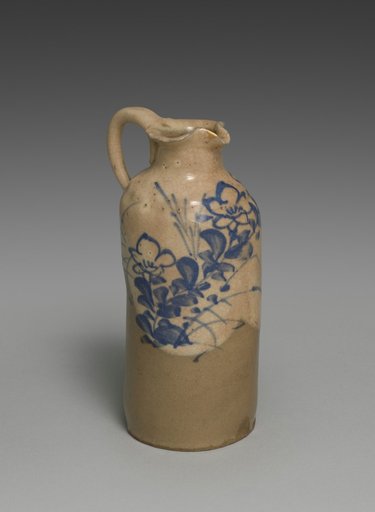 Sake Pourer with Bellflowers
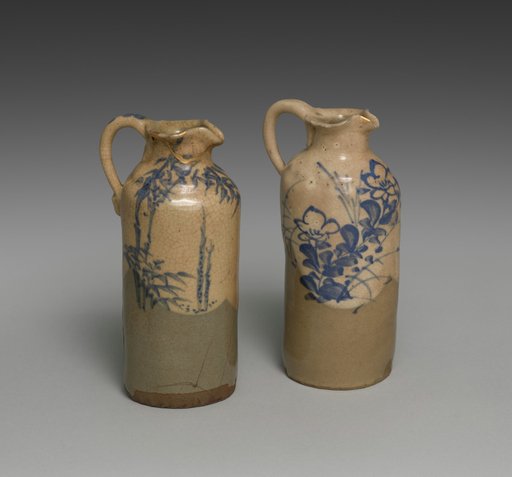 Sake Pourers with Bamboo and Bellflowers
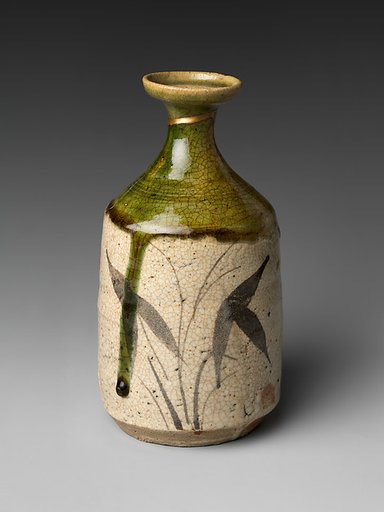 Sake Bottle (Tokkuri) with Decoration of Three-Leaf Arrowhead
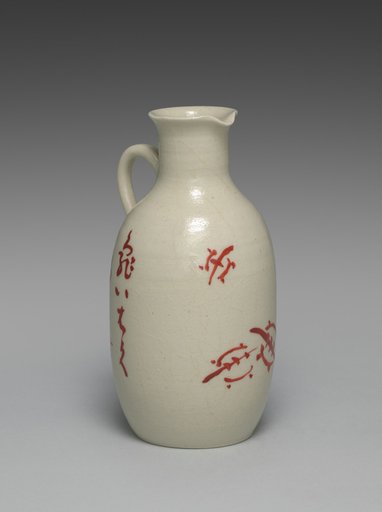 Tortoises Sake Pourer from Sake Pourers with Crane and Tortoises
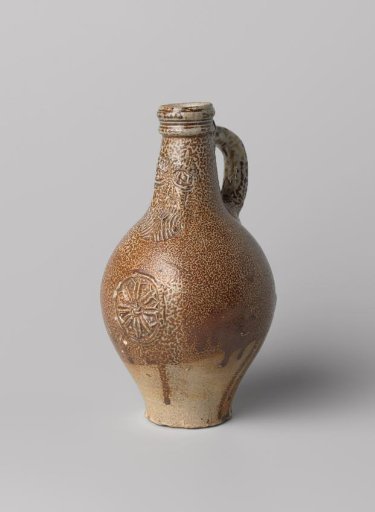 Jug (Bartmann jug) with a roundel in a medallion
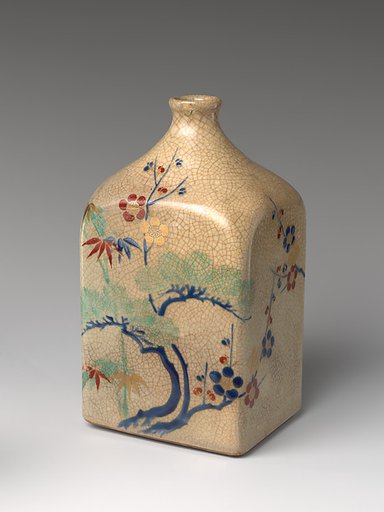 Sake Bottle (Tokkuri) with “Three Friends of Winter” (Pine, Bamboo, and Plum)