CC0 · no rights reserved
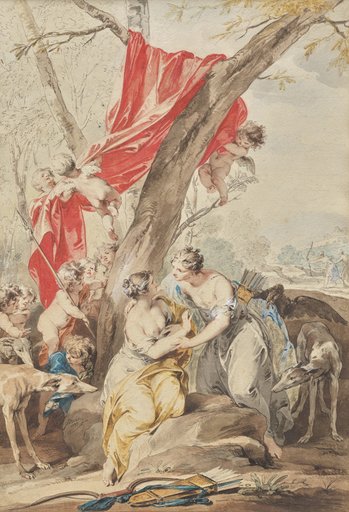
Jupiter (in the guise of Diana) and Callisto
From the collection of Cleveland Museum of Art. Free to download, adapt and use — no permission needed.
About this work
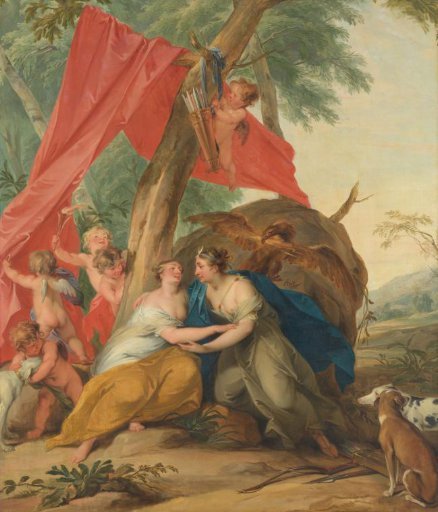
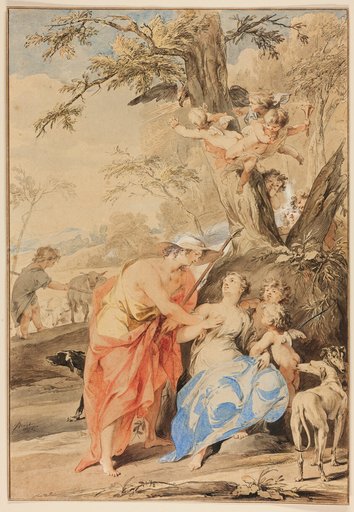
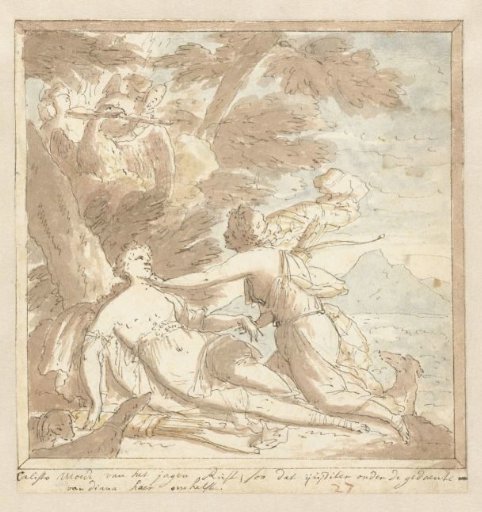
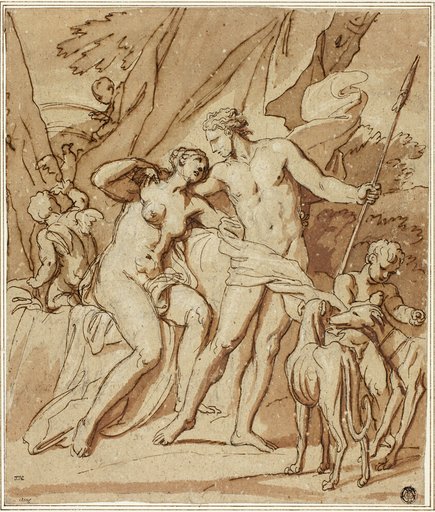
The beautiful Callisto was a follower of the goddess Diana. According to Ovid’s Metamorphosis , she was seduced by Jupiter, who fooled her by appearing in the guise of Diana. Here, the eagle at Diana’s back is the only indicator that Jupiter is present. Such scenes of the loves and misdeeds of the gods were popular in Amsterdam at the beginning of the 1700s, and Jacob De Wit’s primary employment was making large paintings destined for the dining and sitting rooms of stately homes. De Wit also made finished drawings, as here, which were prized for their fresh colors, easy movements, and playfulness.
Cleveland Museum of Art’s own descriptionCredit lineJupiter (in the guise of Diana) and Callisto, 1733. Jacob de Wit (Dutch, 1695–1754). Black chalk, pen and ink, brown and gray wash, watercolor, gouache, white heightening and brown ink framing lines; sheet: 48.6 x 34.9 cm (19 1/8 x 13 3/4 in.); matted: 54.8 x 40.3 cm (21 9/16 x 15 7/8 in.); platemark: 44.8 x 30.8 cm (17 5/8 x 12 1/8 in.). The Cleveland Museum of Art, Norman O. Stone and Ella A. Stone Memorial Fund, 2023.45