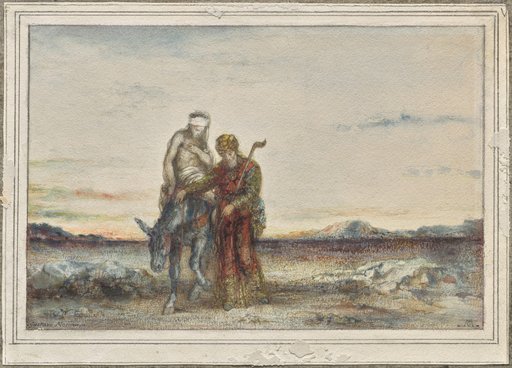
The Good Samaritan
From the collection of Cleveland Museum of Art. Free to download, adapt and use — no permission needed.
Gustave Moreau was distinctive within Symbolism—a movement focused on imagination and interiority—for the fact that he realized relatively traditional subjects often drawn from mythology and religion. Here, Moreau depicts a scene from the Good Samaritan, a story from the Bible’s New Testament about a wounded traveler who is helped by a passerby, despite the ideological and religious differences between the two. Moreau presents the narrative’s most poignant moment, showing the Samaritan giving up his own horse to help his fellow man. The artist used dense, jewellike layers of watercolor to give the scene an emotional and otherworldly tone.
Cleveland Museum of Art’s own description