CC0 · no rights reserved
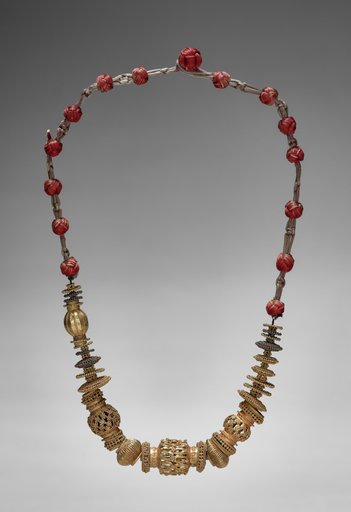
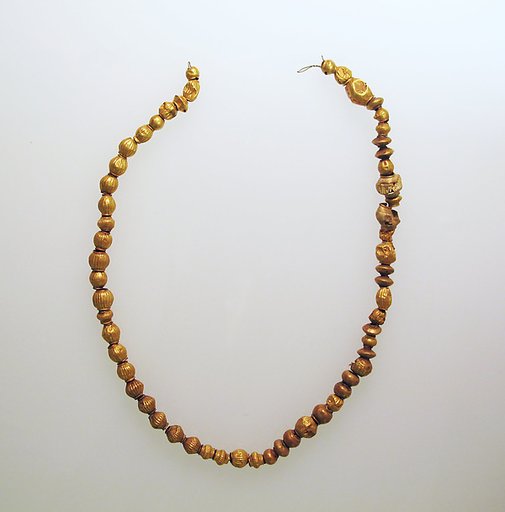
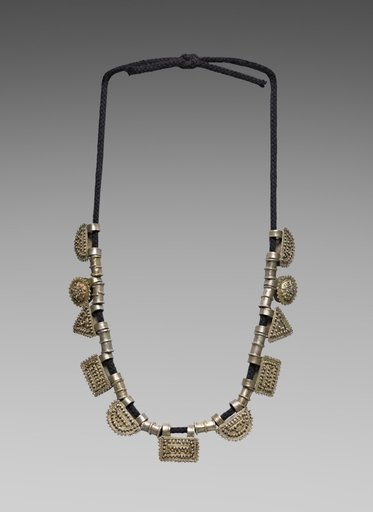
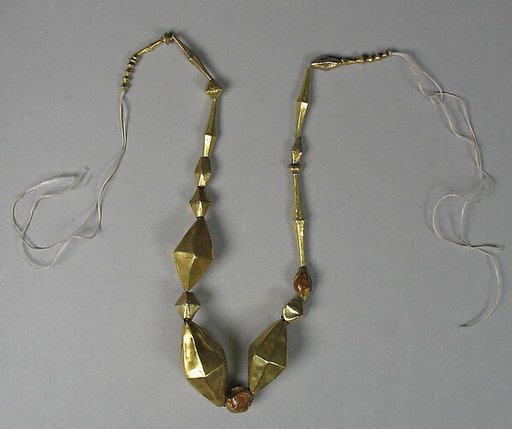
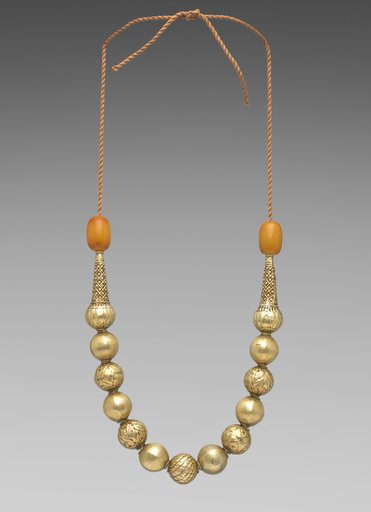
Necklace (muriya or murriyya)
From the collection of Cleveland Museum of Art. Free to download, adapt and use — no permission needed.
About this work
This necklace is from is from the Ethiopian city of Harar, where it was worn only by Muslim women. It was part of the bridal trousseau. The spherical silver beads of this muriya necklace resemble Muslim prayer necklaces. Its warm yellow Baltic amber or Zanzibari copal simultaneously conveyed the wearer’s married status and her access to imported goods. Ornate filigree jewelry was historically made in Ethiopia for royals and nobility by specialized silversmiths trained through long apprenticeships. Customers were generally female, while silversmiths are always male.
Cleveland Museum of Art’s own descriptionCredit lineNecklace (muriya or murriyya), late 1800s or early 1900s. Africa, East Africa, probably Harar, Ethiopia, unknown silversmith. Gilt silver, tree resin (possibly copal). The Cleveland Museum of Art, Gift of Raymond A. Silverman, 2025.155