CC0 · no rights reserved
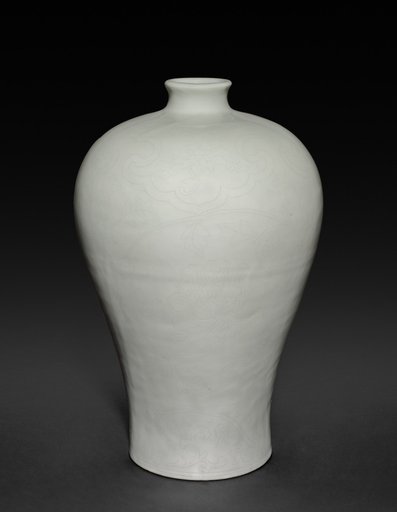
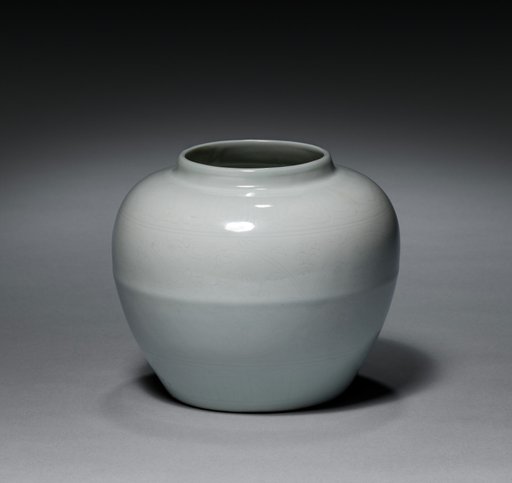
White-Glazed Jar with Hidden Design
From the collection of Cleveland Museum of Art. Free to download, adapt and use — no permission needed.
About this work
White was a ritual color used in Buddhist ceremonies, as well as the color of mourning. This jar is made of two molded halves that were joined where the vessel’s middle section shows a raised line. It is covered by a silky white glaze called “sweet-white” ( tianbai ; 甜白). A “hidden design” ( anhua ; 暗花) of floral scrolls on the shoulder and stylized petals around the base shine through the glaze. The jar may have been used as a planter, a vase for flowers, or it may have held incense sticks on a home altar.
Cleveland Museum of Art’s own descriptionCredit lineWhite-Glazed Jar with Hidden Design, 1500s–1600s. China, Jiangxi province, Jingdezhen kilns, Ming dynasty (1368-1644). Porcelain with sweet-white (tianbai; 甜白) glaze; overall: 13.9 x 16.4 cm (5 1/2 x 6 7/16 in.). The Cleveland Museum of Art, Nancy F. and Joseph P. Keithley Collection Gift, 2020.185