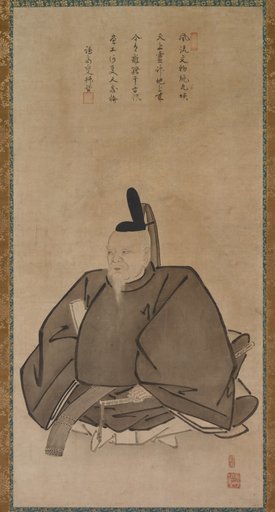
Portrait of Sugawara Michizane
From the collection of Cleveland Museum of Art. Free to download, adapt and use — no permission needed.
Sugawara Michizane (845–903) was a Kyoto aristocrat who died in exile in Dazaifu in Japan’s southern island of Kyushu, having been slandered at court. His vengeful spirit was later pacified by the construction of shrines in his name. His image was incorporated into the repertoire of Zen Buddhist figure painting, which included bodhisattvas, Daoist immortals, and other enlightened beings. Eminent monk Sakugen Shūryō (1501–1579) inscribed this work, which was painted by monk-painter Yōgetsu of Kyushu, who traveled east to study either in Kyoto or Kamakura. The Chinese-style poem is an ode to Michizane in his guise as the deity Tenjin.
Cleveland Museum of Art’s own descriptionSimilar works
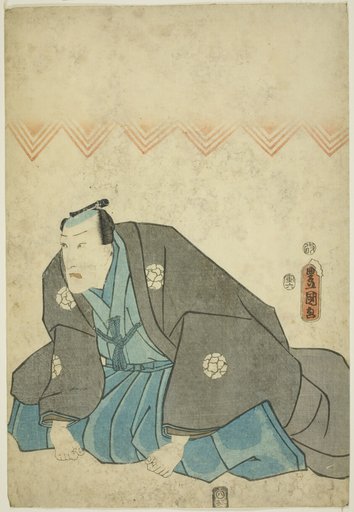 Memorial Portrait of the Actor Ichikawa Danjuro VIII
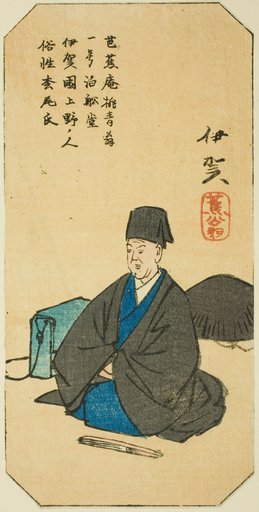 Iga, section of sheet no. 3 from the series "Cutout Pictures of the Provinces (Kunizukushi harimaze zue)"
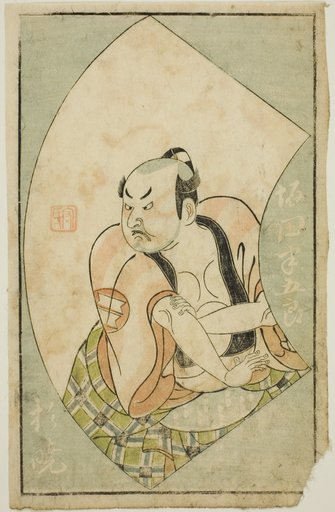 The Actor Sakata Hangoro II, from "A Picture Book of Stage Fans (Ehon butai ogi)"
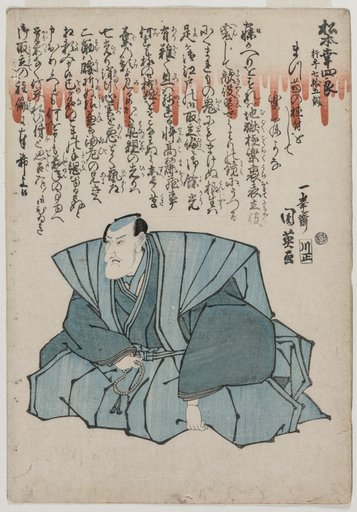 Memorial Portrait of Matsumoto Kōshirō V, Age 75
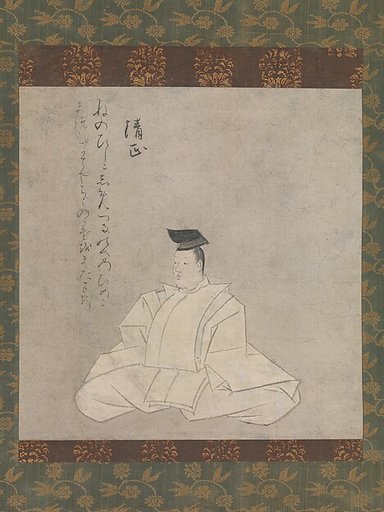 The Poet Fujiwara Kiyotada, from the “Narikane Version” of Thirty-six Poetic Immortals
![Tennojiya Riko (The actor Yamashita Kinsaku II as the maid Ebizo Okane of the Ouchiya [actually Iwate, wife of Sadato])](https://thumbs.arkivism.com/aic-18797.jpg) Tennojiya Riko (The actor Yamashita Kinsaku II as the maid Ebizo Okane of the Ouchiya [actually Iwate, wife of Sadato])
Tennojiya Riko (The actor Yamashita Kinsaku II as the maid Ebizo Okane of the Ouchiya [actually Iwate, wife of Sadato])