CC0 · no rights reserved
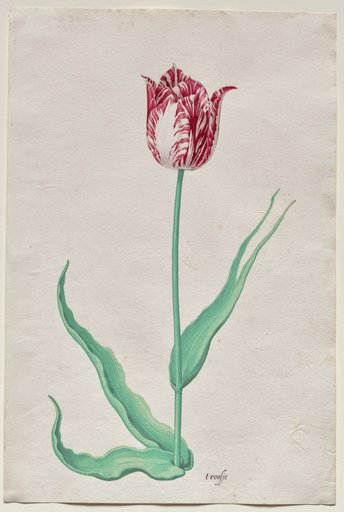
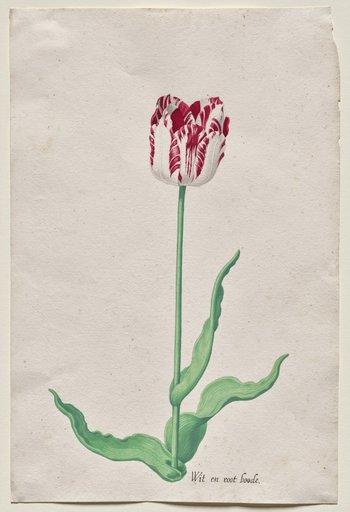
Study of a Tulip (Wit en root boode)
From the collection of Cleveland Museum of Art. Free to download, adapt and use — no permission needed.
About this work
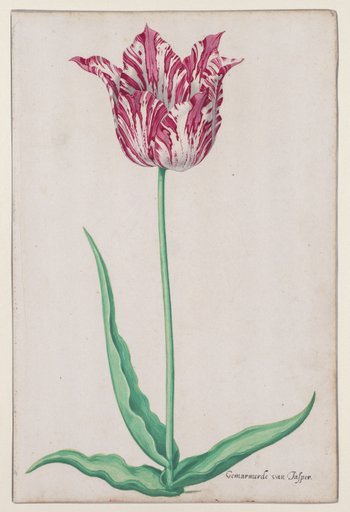
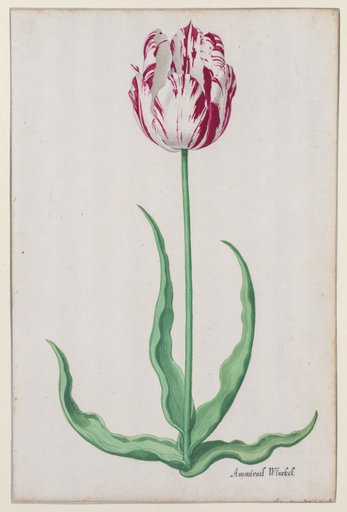
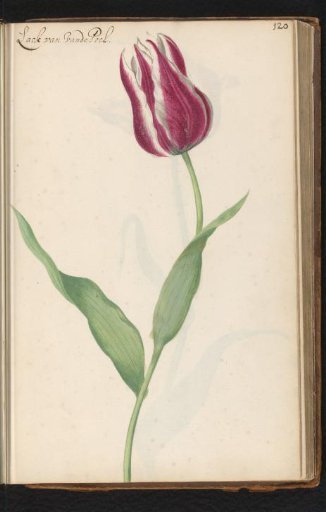
This image of a tulip was made as part of a tulip book used as a grower’s marketing tool during the so-called tulip mania, a speculative bubble in 17th-century Holland, when ten tulip bulbs could cost more than a stately Amsterdam canal house. The striations on the tulip, which were caused by a virus in the bulb, made it especially valuable. Pieter Holsteyn II was one of many artists in the Netherlands at the time who specialized in botanical illustration.This tulip's Dutch name, inscribed on the sheet, means "white and red messenger."
Cleveland Museum of Art’s own descriptionCredit lineStudy of a Tulip (Wit en root boode), c. 1645. Pieter Holsteyn II (Dutch, c.1612–1673). Point of brush and transparent and opaque watercolors with traces of graphite and gum glazing on antique laid paper; sheet: 31.2 x 20.6 cm (12 5/16 x 8 1/8 in.). The Cleveland Museum of Art, Nancy F. and Joseph P. Keithley Collection Gift, 2020.130