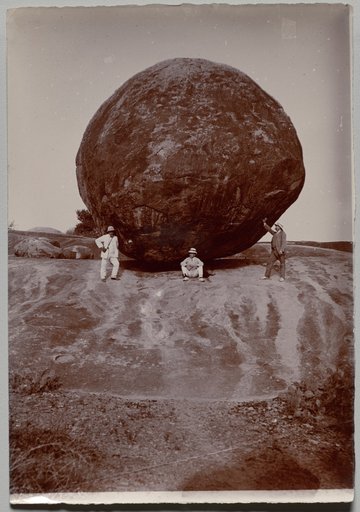
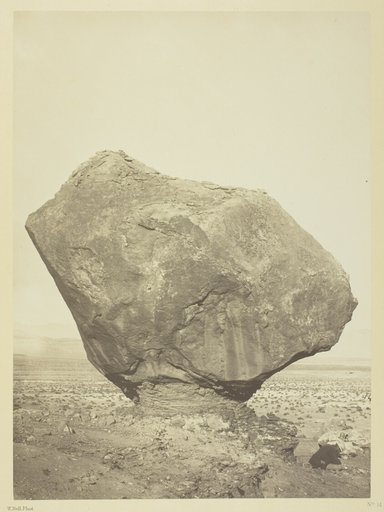
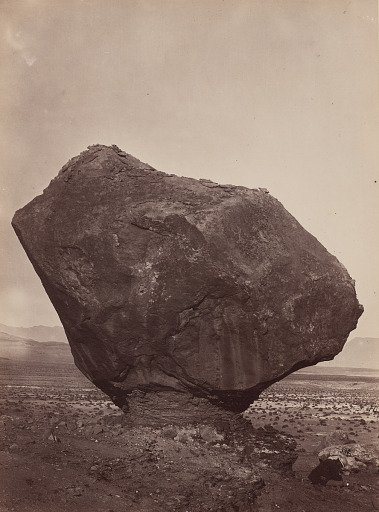
Krishna's Butter Ball, Mahabalipuram
From the collection of Cleveland Museum of Art. Free to download, adapt and use — no permission needed.
Mahabalipuram is a site on India’s southeastern coast where numerous rock-cut temples and sculptures were carved during the early 600s. The site includes a remarkable, naturally occurring boulder that became known popularly as Krishna’s Butter Ball, thereby merging a geological phenomenon with sacred narrative. If baby Krishna could crawl while holding this monolith as effortlessly in his hand as a ball of butter, he must be a magnificently powerful god. Colonial-era tourists enjoy their excursion to the site with no indication that they recognized its sanctity. Photographs such as this would have been sent back to Britain for viewers to marvel at the landscape of India.
Cleveland Museum of Art’s own description
![Balance Rock, Bar Harbor, Mt. [i.e. Mount] Desert Island, Me.](https://thumbs.arkivism.com/loc-2016808943.jpg)