CC0 · no rights reserved
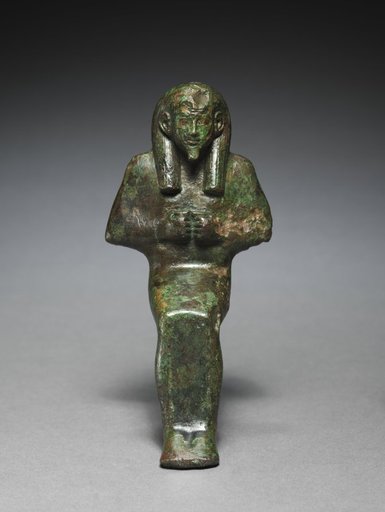
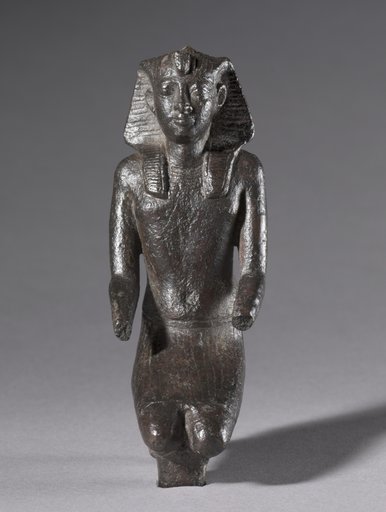
Statuette of Kneeling King
From the collection of Cleveland Museum of Art. Free to download, adapt and use — no permission needed.
About this work
As the chief intermediary between gods and men, the Egyptian king is often shown kneeling in adoration. Enough remains of this king's arms to indicate that his hands may have held offering jars or were extended with the palms facing each other around a naos, or shrine, containing a divine image. In Egypt, adoration required a divine recipient. This example was undoubtedly part of a group composition in which the king faced a larger figure of a god.
Cleveland Museum of Art’s own descriptionCredit lineStatuette of Kneeling King, 304–30 BCE. Egypt, Greco-Roman period (332 BCE–395 CE), Ptolemaic dynasty (305–30 BCE). Bronze, solid cast; overall: 4.2 x 5.5 cm (1 5/8 x 2 3/16 in.); with tang: 12.7 cm (5 in.); without tang: 11 cm (4 5/16 in.). The Cleveland Museum of Art, Gift of the John Huntington Art and Polytechnic Trust, 1914.575