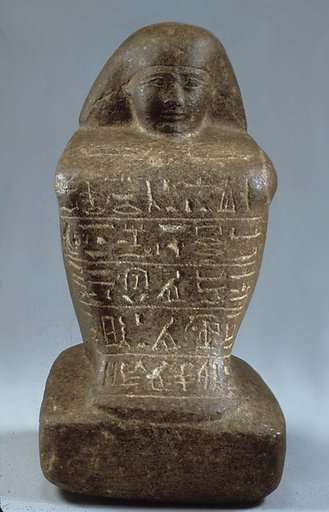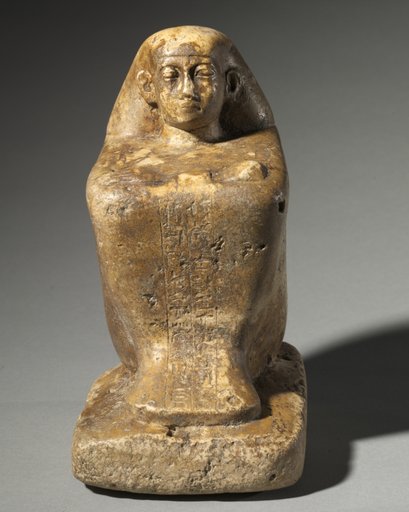
Block Statue of Djedbastetiufankh
From the collection of Cleveland Museum of Art. Free to download, adapt and use — no permission needed.
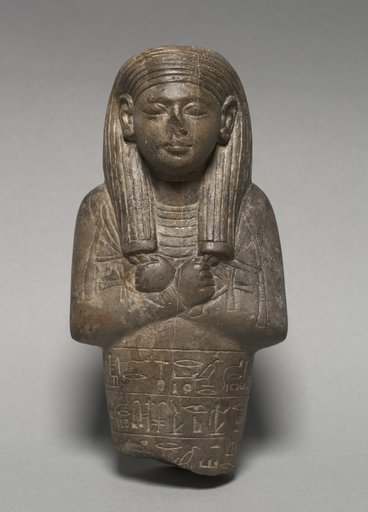
There are two basic types of Egyptian statues: tomb statues and temple statues. The Bust of Ankh-Hor and the Block Statue of Djedbastetiufankh in this case are temple statues. The compact form of the block statue appealed to Egyptian sculptors because it was virtually unbreakable. It represents the subject squatting on the ground, arms crossed over his knees. His long, enveloping mantle is contoured to his body shape, so that it resembles a cube. From the position of the arms, it is evident that the Bust of Ankh-Hor originally belonged to a striding figure holding a naos, or shrine, containing the image of a deity. His high.waisted wraparound robe, fashionable during the Persian Period (Dynasty 27) when this figure was carved, would have reached to his ankles.
Cleveland Museum of Art’s own description