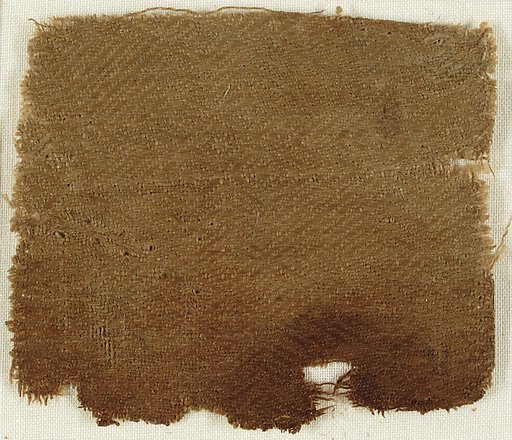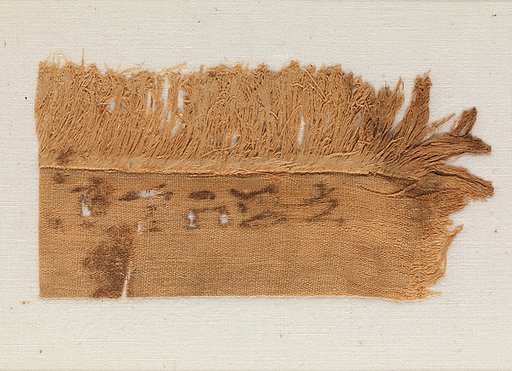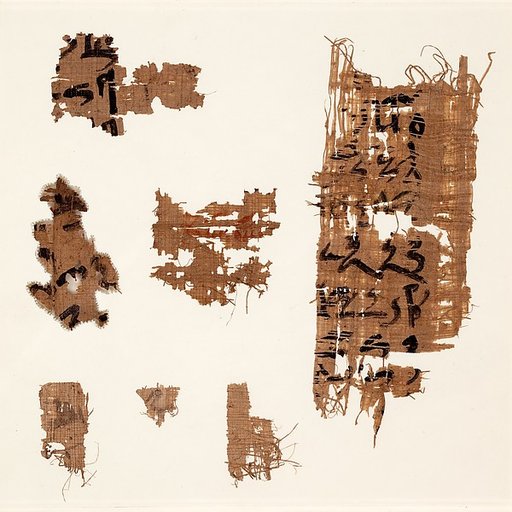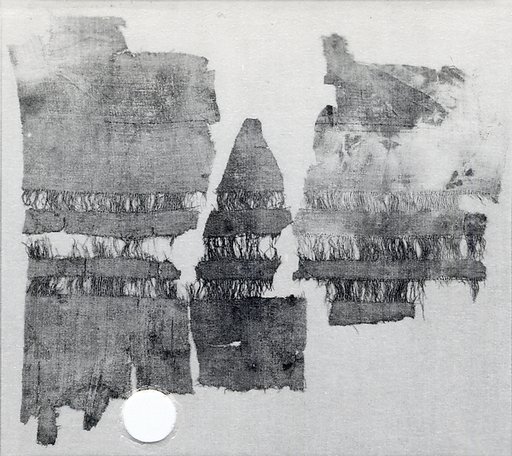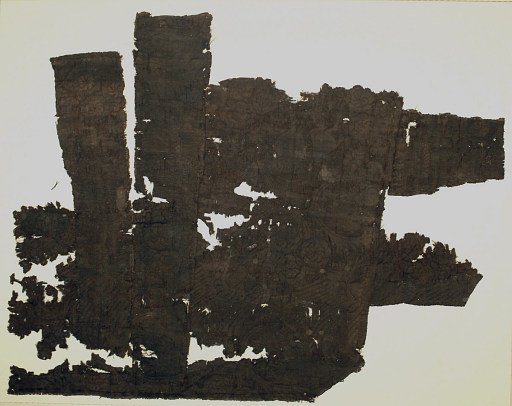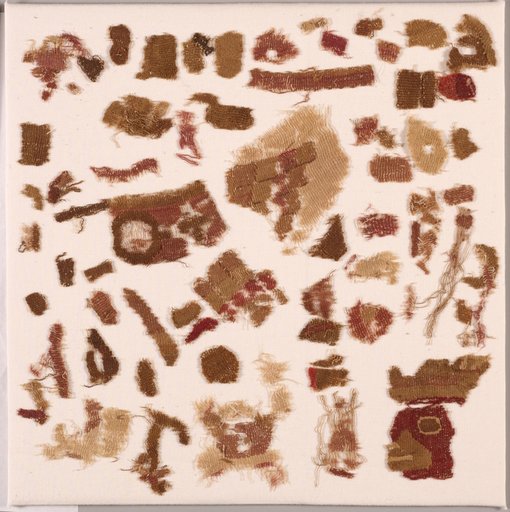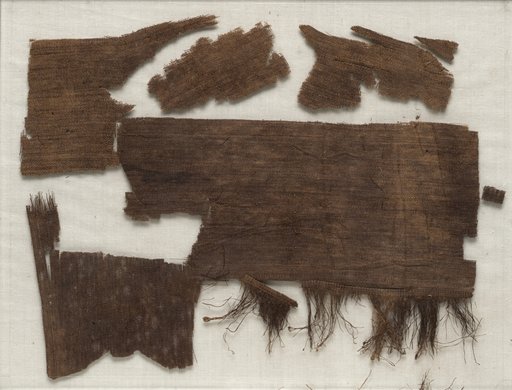
Fragments of Egyptian Mummy Wrappings fround in Senbi Coffin
From the collection of Cleveland Museum of Art. Free to download, adapt and use — no permission needed.
The most common type of coffin during the Middle Kingdom took the shape of a rectangular box with lid. The mummy inside was placed on his left side, facing east, his head behind the two magical eyes. These—in the shape of human eyes, to which have been added the markings of a falcon's head—were supposed to enable him to behold the rising sun, reborn daily. The long horizontal inscriptions are prayers to Anubis (god of embalming) and Osiris (god of the dead) for offerings of food and drink and other items necessary for survival in the afterlife. The short vertical inscriptions place him under the protection of the gods of earth, sky, air, and moisture, as well as various funerary deities.
Cleveland Museum of Art’s own description