CC0 · no rights reserved
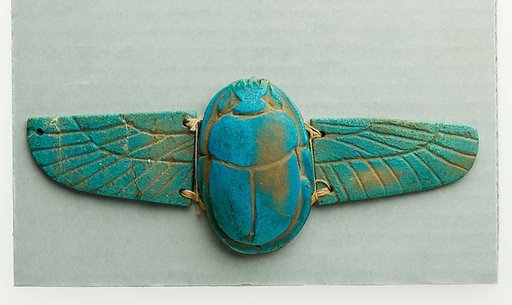
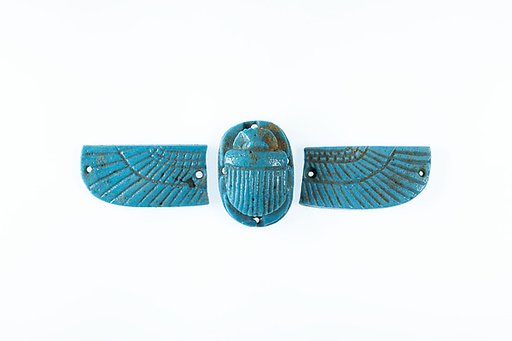
Winged Pectoral Scarab
From the collection of Cleveland Museum of Art. Free to download, adapt and use — no permission needed.
About this work
To create connections between their work and ancient Egypt, European and American jewelers conducted careful research, looking at sources including hieroglyphs in funerary art and architecture. The1924 Cartier scarab brooch was directly inspired by representations of the dung beetle, which also stood for Khepri, a sun deity of resurrection, while the 1927 gateway brooch echoes the silhouette of ancient Egyptian temple entrances. Beauty companies like Bourjois even adopted ancient Egyptian motifs for their marketing and packaging, suggesting the elegance of their brand through sensationalized elements of ancient Egyptian art.
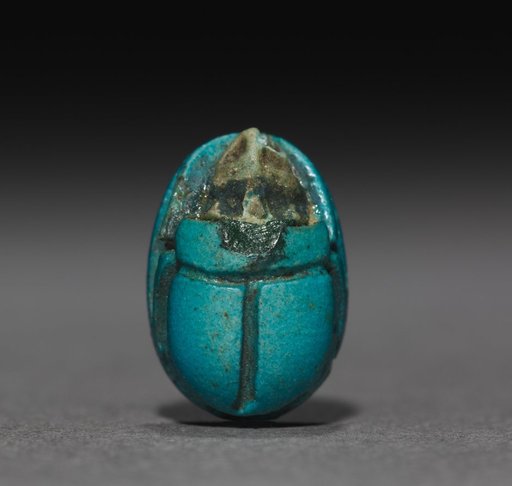
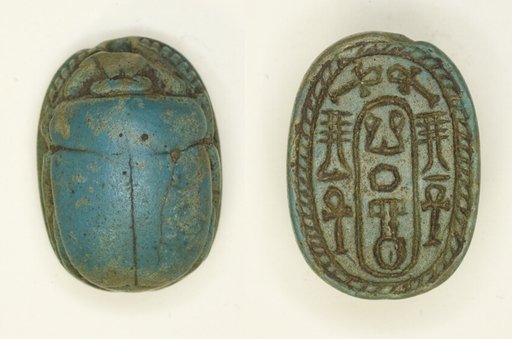
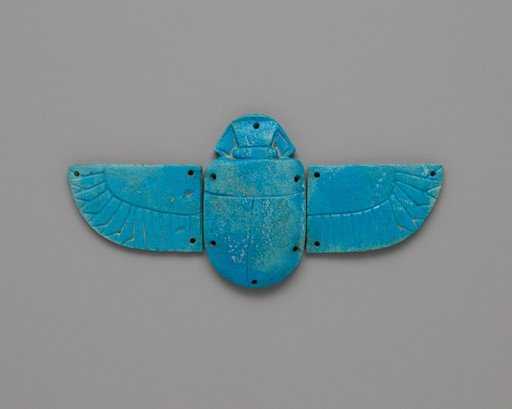
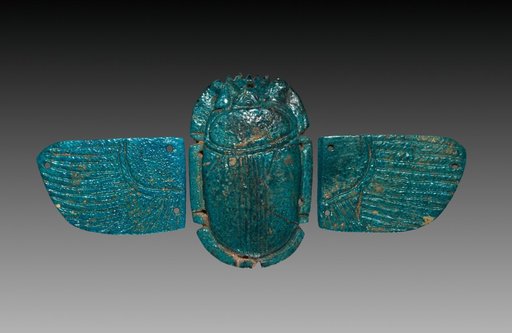
Cleveland Museum of Art’s own descriptionCredit lineWinged Pectoral Scarab, 664–525 BCE. Egypt, Late period (715–332 BCE), Dynasty 26. Deep turquoise faience; overall: 7 cm (2 3/4 in.). The Cleveland Museum of Art, Gift of the John Huntington Art and Polytechnic Trust, 1914.766