CC0 · no rights reserved
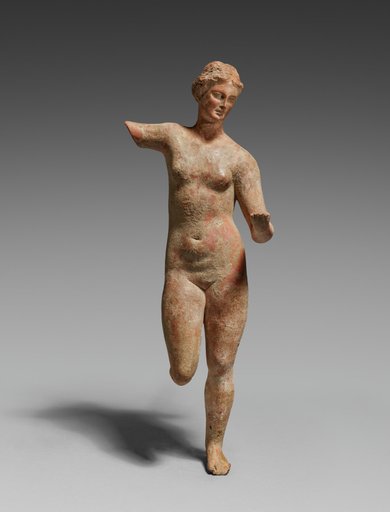
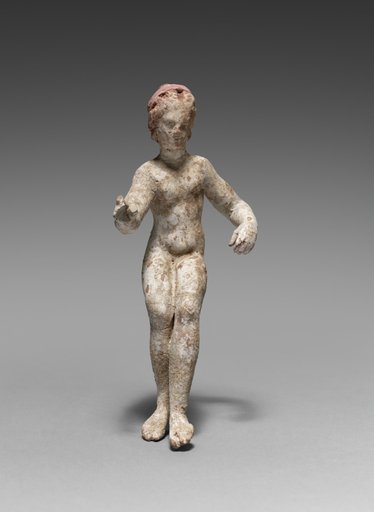
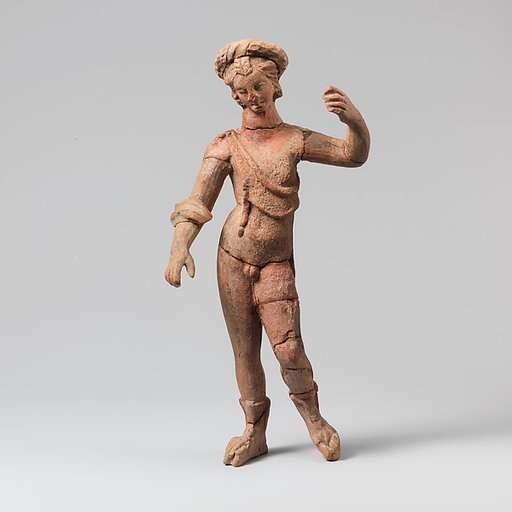
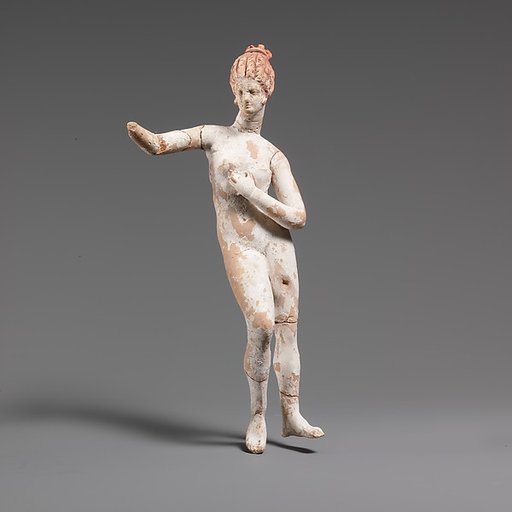
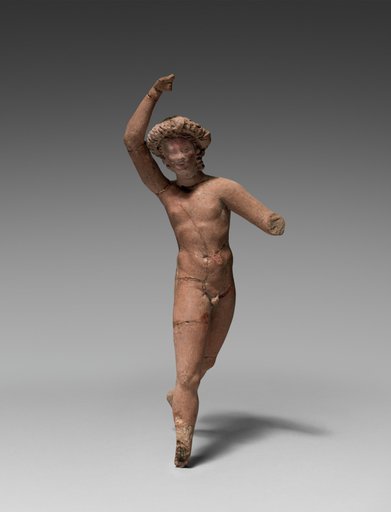
Dancing Eros
From the collection of Cleveland Museum of Art. Free to download, adapt and use — no permission needed.
About this work
The region of Myrina in Asia Minor (now part of modern Turkey) is known for its abundance of ancient terracotta figurines. Eros, the Greek god of love, was especially popular. Here he is depicted as a nude youth, not a small child. Eros’ extra-long legs and arms, though only partially preserved, are thrown about in a carefree dance. He wears a celebratory floral crown atop his long curls. Once probably fully painted, only traces of red pigment survive on the face. A figurine like this one may have been a votive or offering of thanks to Eros or Aphrodite, his mother, also a goddess of love, for a successful marriage.
Cleveland Museum of Art’s own descriptionCredit lineDancing Eros, 300–200 BCE. Anatolia, Myrina, Greece. Terracotta; overall: 29 cm (11 7/16 in.). The Cleveland Museum of Art, Gift of the John Huntington Art and Polytechnic Trust, 1915.1