Pietà
From the collection of Cleveland Museum of Art. Free to download, adapt and use — no permission needed.
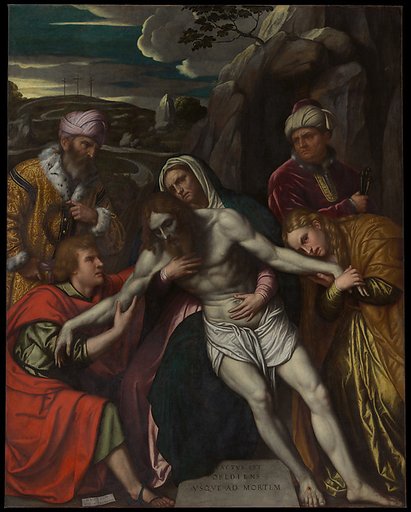
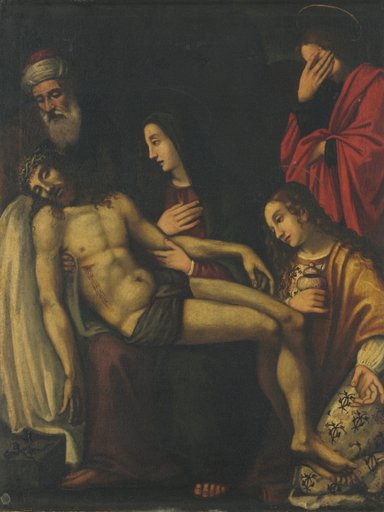
Originating in Germany in the 1300s, the intense moment of lamentation, often referred to as a pietà, has no origin in the Bible. Though it was more widespread in northern Europe, the poignant scene of Mary holding the body of her deceased son expanded into Italy as well. In this painting, Nicodemus supports Christ's upper body, Mary clasps her son's elbow as he lies across her lap, Mary Magdalene kneels at Christ's feet, and John the Apostle covers his face in grief behind her. The crown of thorns upon Christ's head and the blood still visible from his wounds recall the events of the Passion and highlight the sorrow of the Virgin.
Cleveland Museum of Art’s own description