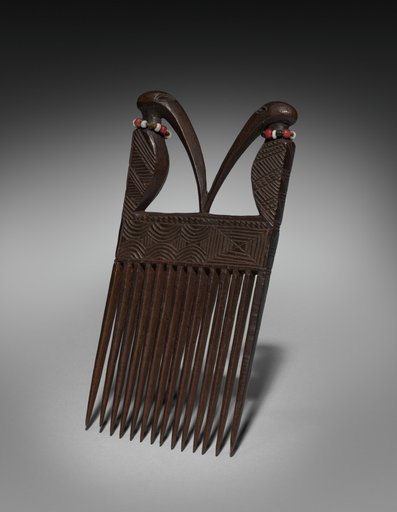
Comb (cisakulo)
From the collection of Cleveland Museum of Art. Free to download, adapt and use — no permission needed.
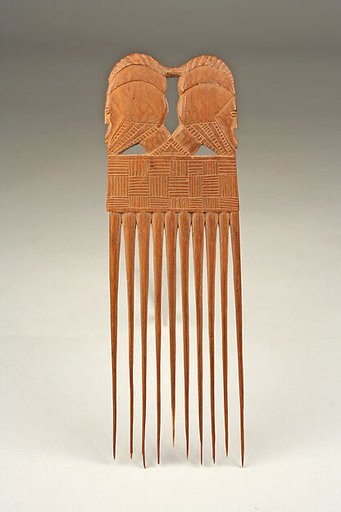
Chokwe women and men inserted finely decorated combs and pins in their hair to signal rank and wealth. Here, as among neighboring peoples, hairstyles reflected changing trends across place and over time. This comb's wooden material and sculptural top made it of a higher value than simple examples made from metal or cane. Its wide teeth were practical, securing elements of a hairstyle in place. The long-beaked ngungu birds with beaded necklaces were a well-known symbol of chiefly power. In addition to being a sign of beauty and good health, a well-styled hairdo also suggests that the wearer relies on the help of others in its creation. Combs were often gifted to women by admirers or husbands to mark important life events. This comb entered the Cleveland Museum of Art's collection in 1915, one year before the museum opened its doors.
Cleveland Museum of Art’s own description