CC0 · no rights reserved
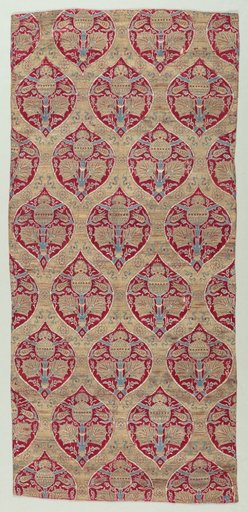
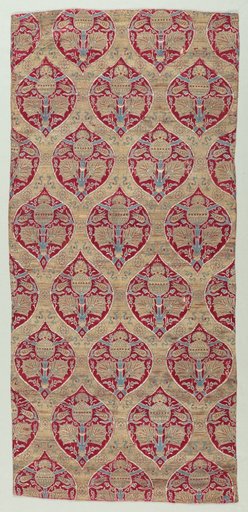
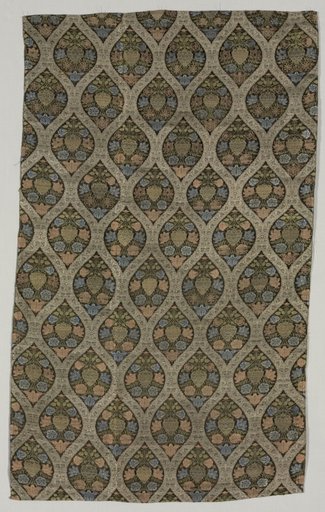
Lampas fragment with blossoms in ogival lattice
From the collection of Cleveland Museum of Art. Free to download, adapt and use — no permission needed.
About this work
The Iranian love of gardens was celebrated in poetry, yet textile patterns composed of blossoming plants only became fashionable in the 1630s, most likely inspired by European botanical engravings, and they dominated for the next 200 years. This design of composite plants within a curving ogival lattice is typically Iranian in the combination of blossoms with a prominent iris, range of colors, and technique with wefts floating, rather than bound in, across the back. However, the lattice layout framing blossoms were, on a larger scale, a hallmark of Ottoman Turkey.
Cleveland Museum of Art’s own descriptionCredit lineLampas fragment with blossoms in ogival lattice, 1600s. Iran, Safavid period (1501–1722). Silk and silver-metal thread: lampas; overall: 114.3 x 68.6 cm (45 x 27 in.); mounted: 123.8 x 77.5 cm (48 3/4 x 30 1/2 in.). The Cleveland Museum of Art, Gift of the John Huntington Art and Polytechnic Trust, 1915.666