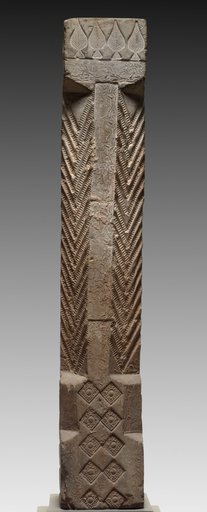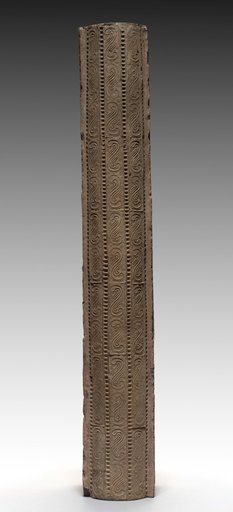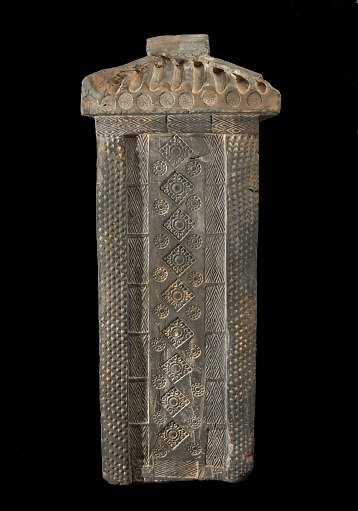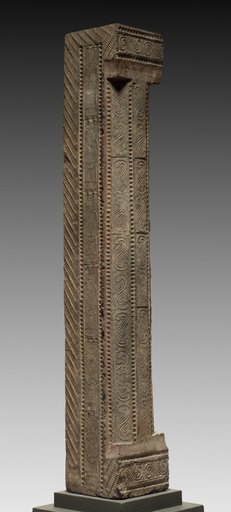
Hollow Tile: Column from Tomb-Chamber Doorway
From the collection of Cleveland Museum of Art. Free to download, adapt and use — no permission needed.
Striding tigers (top), racing horsemen (right column), and reverent officials (left column) are stamped into the surface of this underground portal to a tomb. The doorway preserves in stone the post-and-lintel structure, a basic element of Chinese wooden architecture. By the first century AD, a revolution in Chinese tomb construction and furnishing had taken place. Tombs lined with decorated bricks and tiles replace the earlier tombs constructed with only rammed earth-walls. Ceramic surrogates or models of stoves, houses, servants, and pets filled these more durable chambers, symbolically extending the creature comforts of this world into the world after death.
Cleveland Museum of Art’s own description