CC0 · no rights reserved
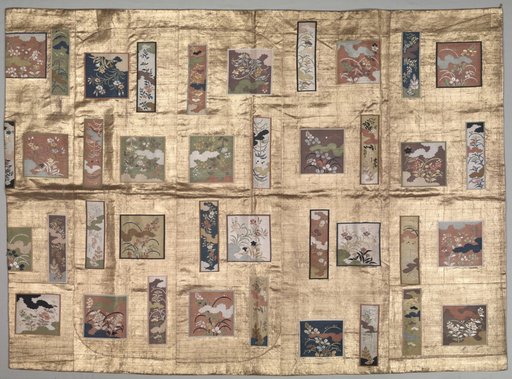
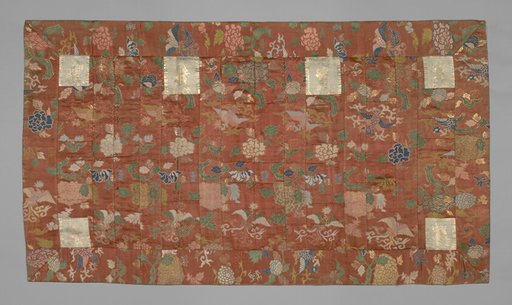
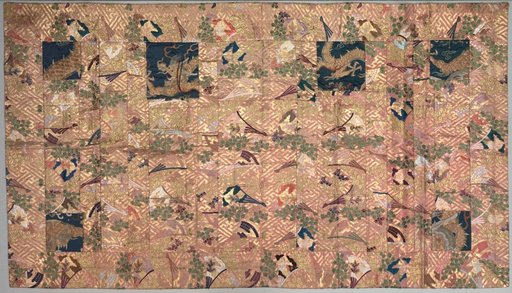
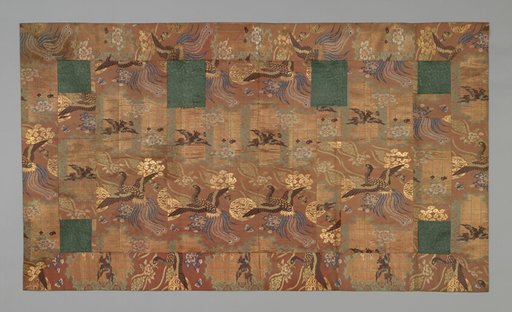
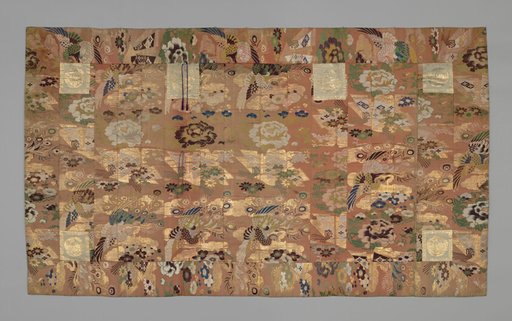
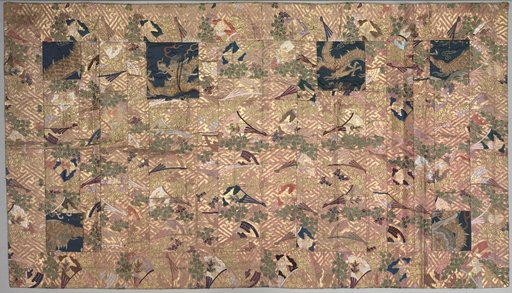
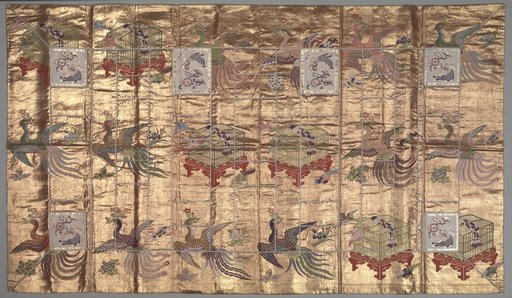
Buddhist Vestment (Kesa)
From the collection of Cleveland Museum of Art. Free to download, adapt and use — no permission needed.
About this work
Kesa are Buddhist monastic robes that originated in India. The robes are named after the brown or saffron dye originally used in their production. The primary motif on this seven-paneled kesa is a long-tailed bird with a flower in its mouth. This motif was imported from Persia (present-day Iran) through China during the Nara period (710–794)and is interpreted as a positive symbol. The bird delivers happiness in its mouth.
Cleveland Museum of Art’s own descriptionCredit lineBuddhist Vestment (Kesa) (花喰鳥文袈裟), early 1900s. Japan, Meiji period (1868–1912). Silk with supplementary weft, brocaded; metal thread; overall: 119.4 x 205.7 cm (47 x 81 in.). The Cleveland Museum of Art, Gift of Mr. and Mrs. J. H. Wade, 1916.1340