Halberd
From the collection of Cleveland Museum of Art. Free to download, adapt and use — no permission needed.
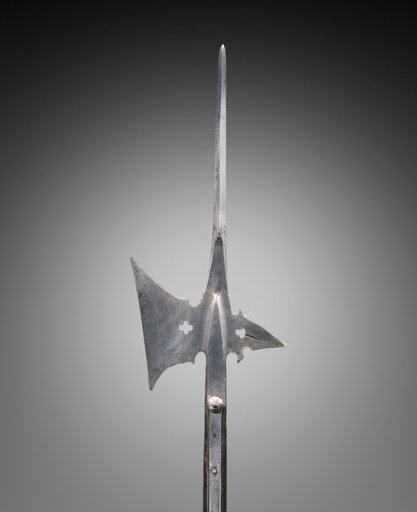
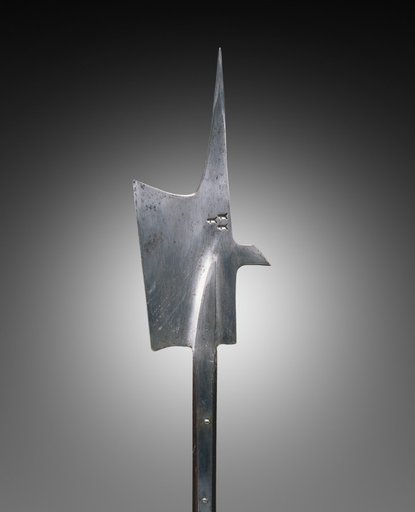
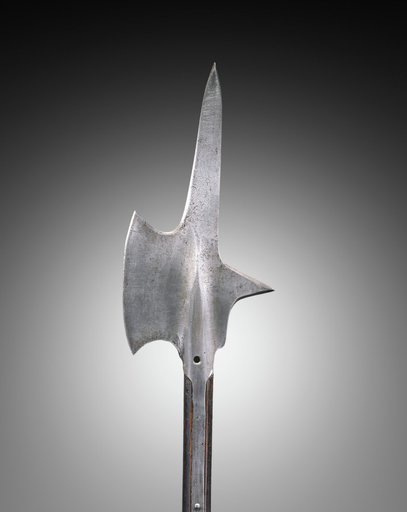
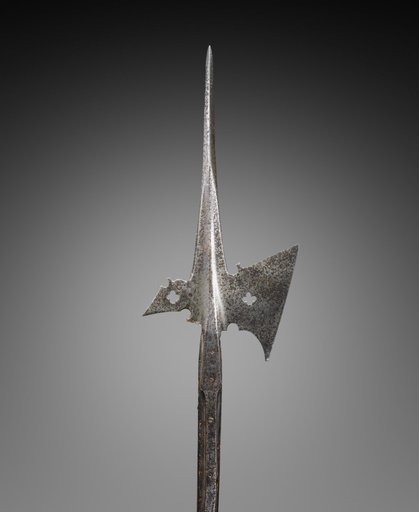
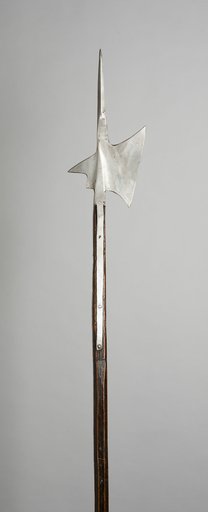
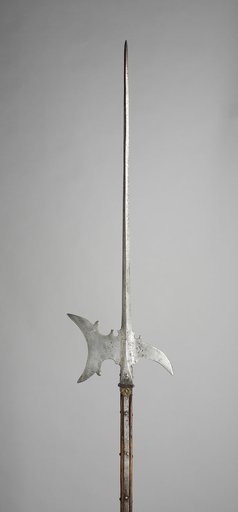
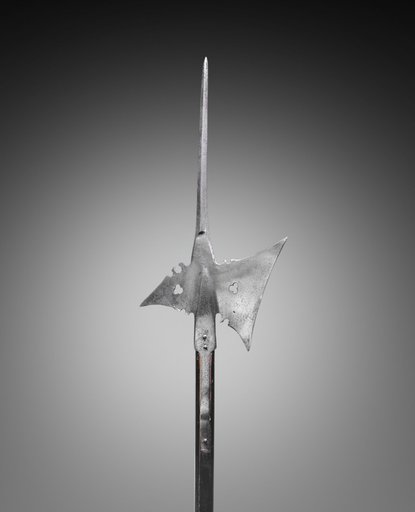
The most effecient weapons used by the infantry (foot soldiers) during the 15th and 16th centuries were pole arms (or staff weapons). The halberd, like the examples shown here, was a weapon of great versatility. The word halberd comes from the German words Halm (a staff) and Barte (an axe). The halberd is, in fact, an axe mounted on a long pole with a very specialized shape and function: the axe blade was used for hacking, the spike for thrusting, and the beak either for piercing plate armor or for pulling a knight from his saddle. Used by shock troops, the halberd was the weapon of choice for Swiss and German mercenaries. From about 1550 onward, the halberd underwent major changes. Its distinctive outline became exaggerated and its functional elements evolved into purely ornamental shapes. The halberd's large blade conveniently provided space for armorial devices. By the late 1500s, it became a ceremonial weapon favored by princely body guards. It is still carried today by the Swiss Guard at the Vatican.
Cleveland Museum of Art’s own description