CC0 · no rights reserved
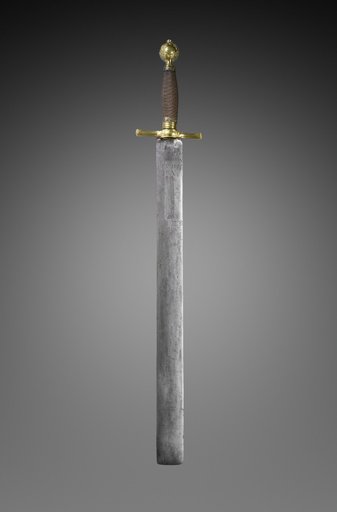
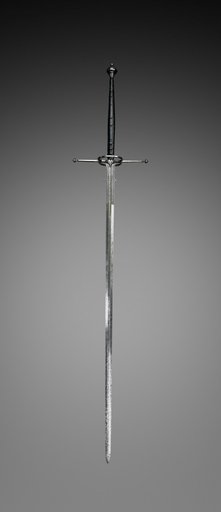
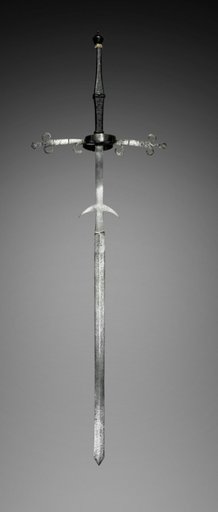
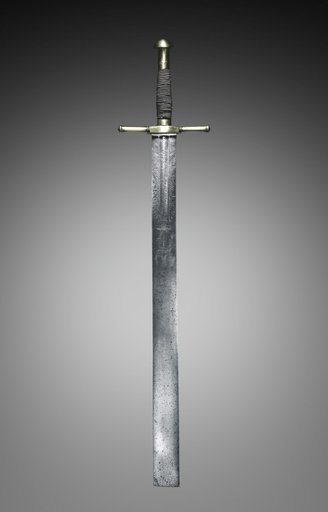
Executioner's Sword
From the collection of Cleveland Museum of Art. Free to download, adapt and use — no permission needed.
About this work
Execution by decapitation was generally reserved for the nobility during the Middle Ages and Renaissance. Although the axe was favored in England, for centuries swords were used throughout Central Europe. The blades were often etched with moralizing inscriptions and designs representing Justice (as here), the gallows, the rack, or the Crucifixion. By the early 1700s swords were no longer primarily used in Europe for executions, but they still functioned as symbols of power. This sword was probably ceremonial for a formal procedure or procession.
Cleveland Museum of Art’s own descriptionCredit lineExecutioner's Sword, late 1600s. Germany, late 17th Century. Steel, wood, brass and copper wire; overall: 108.9 cm (42 7/8 in.); blade: 85.7 cm (33 3/4 in.); quillions: 22.5 cm (8 7/8 in.); grip: 15 cm (5 7/8 in.). The Cleveland Museum of Art, Gift of Mr. and Mrs. John L. Severance, 1916.1620