CC0 · no rights reserved
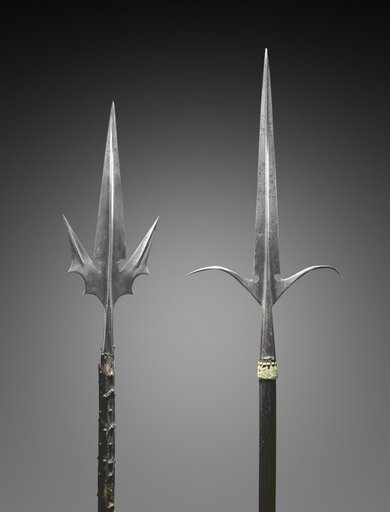
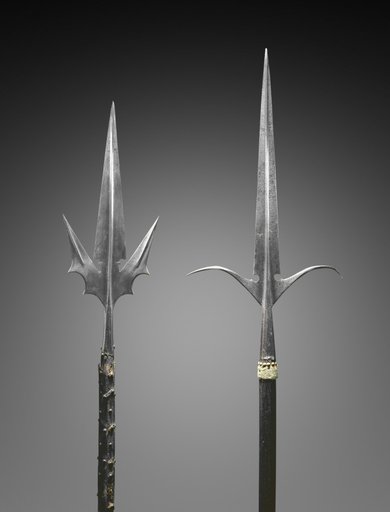
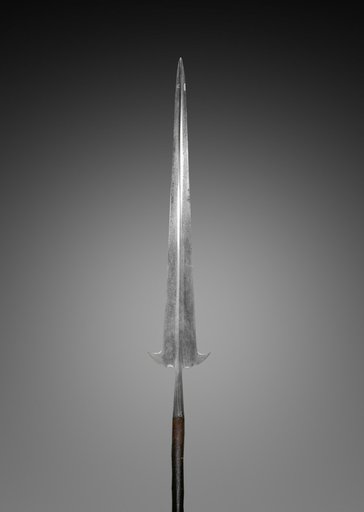
Corsèque (Chauve-Souris)
From the collection of Cleveland Museum of Art. Free to download, adapt and use — no permission needed.
About this work
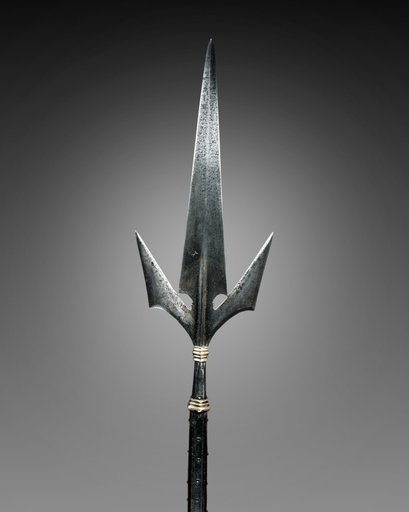
The corsèque is a pole arm with a symmetrical three-pronged head consisting of a central double-edged blade and two sharp, upturned wings. The side blades served several functions: as guard to protect the soldier's hand when a thrust was delivered with the central blade; as a hook for unseating a mounted opponent; and to trip the opponent's horse. The corsèque was used mostly in Italy and France from the 1400s to the early 1600s.
Cleveland Museum of Art’s own descriptionCredit lineCorsèque (Chauve-Souris), c. 1530. North Italy, 16th century. Steel; round wood haft with leather straps; overall: 183.5 cm (72 1/4 in.); blade: 22.2 cm (8 3/4 in.). The Cleveland Museum of Art, Gift of Mr. and Mrs. John L. Severance, 1916.1802
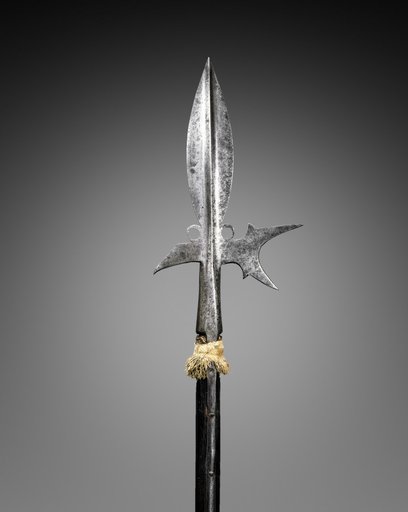
![Parade Halberd (from the state guard of Elector Christian I of Saxony [ 1560- 91])](https://thumbs.arkivism.com/cma-96091.jpg)