CC0 · no rights reserved
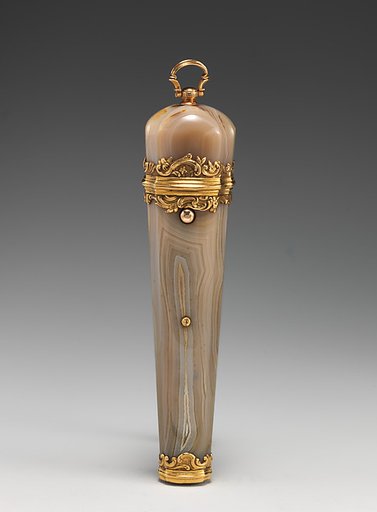
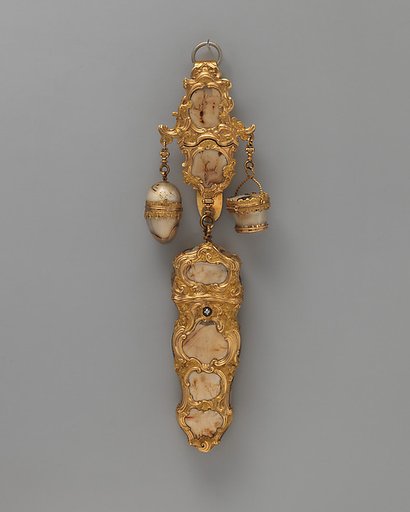
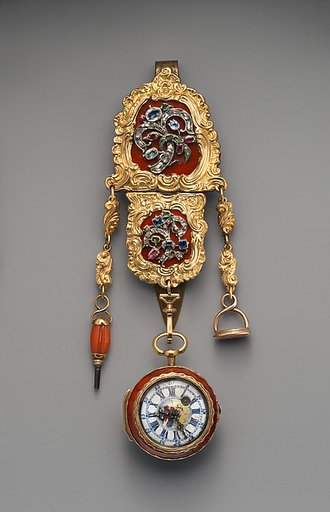
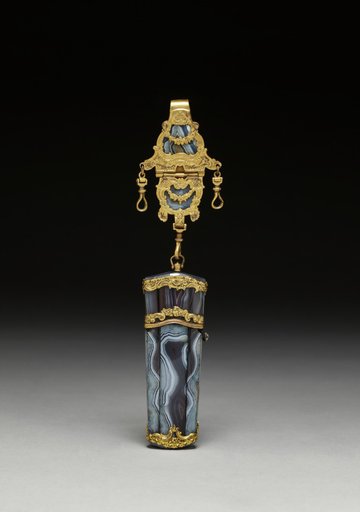
Chatelaine and Case (Étui)
From the collection of Cleveland Museum of Art. Free to download, adapt and use — no permission needed.
About this work
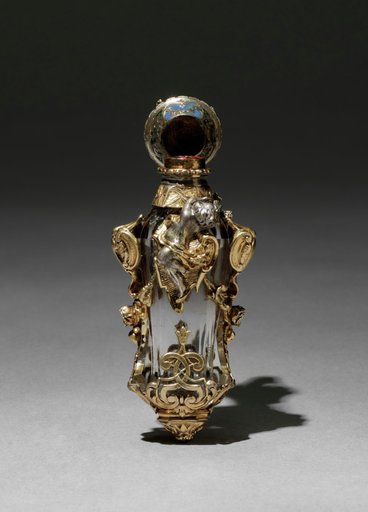
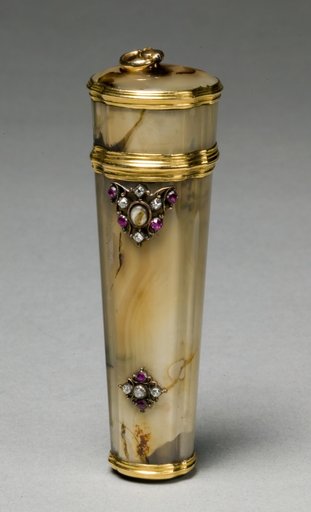
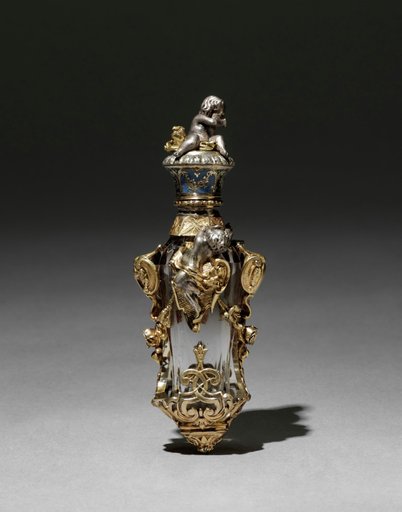
Luxurious personal objects were an essential part of a privileged wardrobe during the 1700s and early 1800s, emphasizing their owner’s refinement and wealth. Especially popular were étuis , small ornamented cases containing miniature sewing, writing, or grooming implements that hung at a woman’s waist from an ornate clasp, known as a chatelaine . Despite its glittering surface, this small expensive set disguised a system based on the labor and suffering of enslaved or indentured people, whether in gold and stone mines or the shop where it was made.
Cleveland Museum of Art’s own descriptionCredit lineChatelaine and Case (Étui), c. 1770. England, 18th century. Gray agate mounted in gilt metal; overall: 18.1 cm (7 1/8 in.). The Cleveland Museum of Art, Gift of Mr. and Mrs. J. H. Wade, 1916.313