CC0 · no rights reserved
Belt Ornament
From the collection of Cleveland Museum of Art. Free to download, adapt and use — no permission needed.
About this work
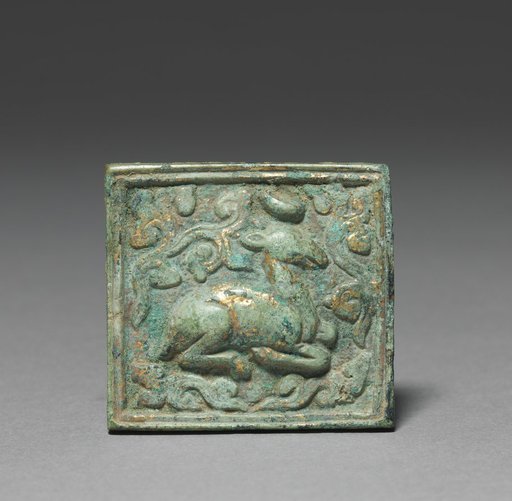
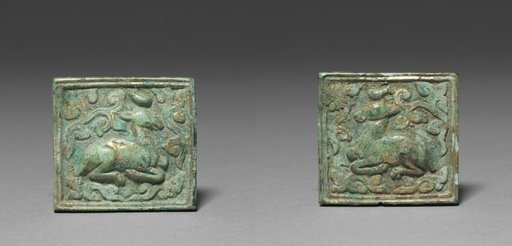
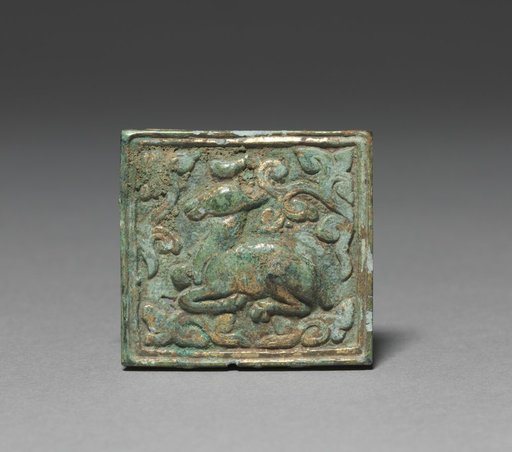
Metallurgy advanced remarkably in the Goryeo period (918-1392), explaining why a large quantity of sophisticated metal artifacts with delicate designs were used not only as daily accessories but also as burial goods. Belt ornaments like this example were fixed to leather belts. Surround by intricate arabesque patterns, a seated dear was done in the repoussé technique. Such animal motifs were widely shared among Eastern Eurasian tribes, from where the first settlers in the Korean peninsula originated.
Cleveland Museum of Art’s own descriptionCredit lineBelt Ornament (금동과대장식 [金銅銙帶裝飾]), 1100s. Korea, Goryeo dynasty (918–1392). Gilt bronze with repoussé relief; overall: 4.7 x 4.9 cm (1 7/8 x 1 15/16 in.). The Cleveland Museum of Art, Gift of the John Huntington Art and Polytechnic Trust, 1917.1053.2