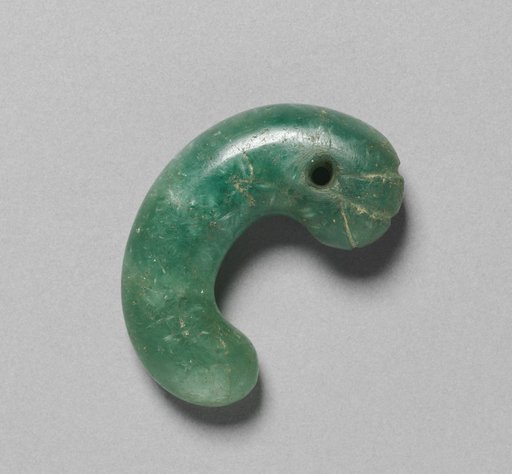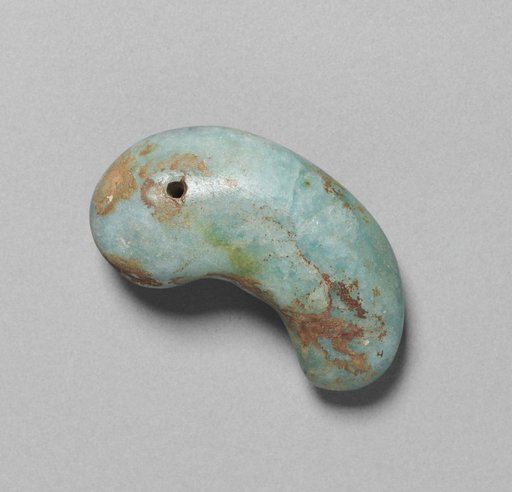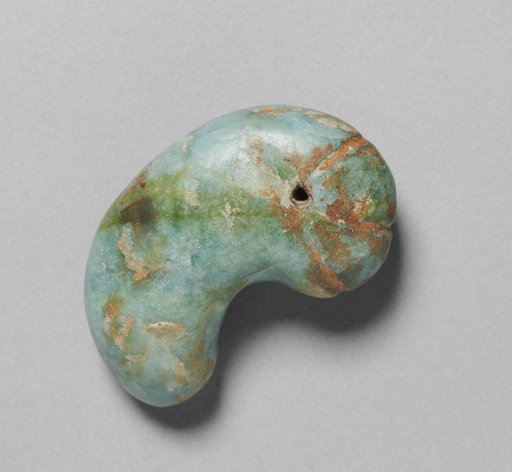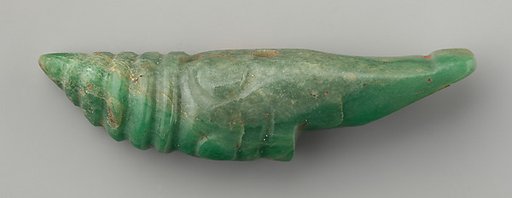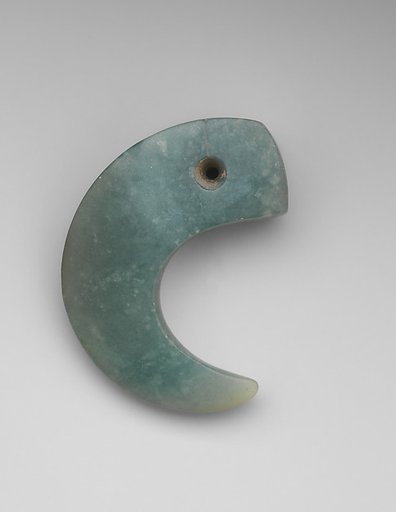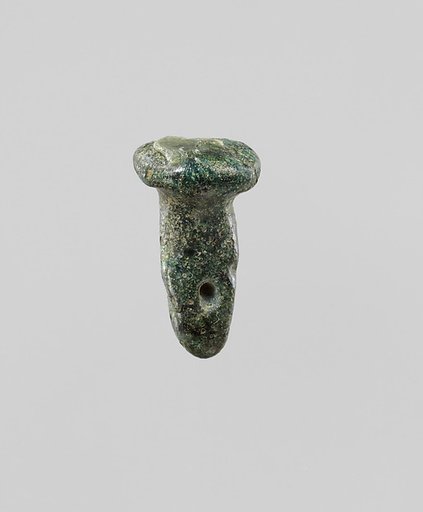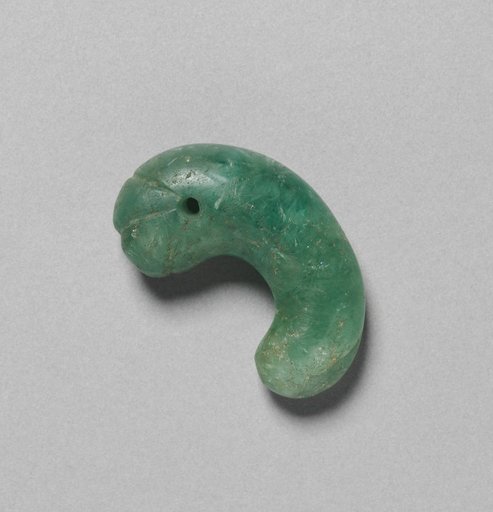
Comma-shaped Jade
From the collection of Cleveland Museum of Art. Free to download, adapt and use — no permission needed.
Jade is one of the hardest stones and requires an intensive, arduous process of abrasion—cutting, chiseling, grinding, and polishing—to achieve the desired shape. A grindstone and a slurry of grit and water shape the jade into the desired form, and then a cloth dampened and rubbed with finer grit may have been used to give the jade the smooth surface. For the Silla kingdom (57 BC–985), in particular, comma-shaped jades served as an essential item for the burials of the ruling class and were luxurious accessories to decorate golden crowns. Their comma shape is thought to represent embryonic forms, symbolizing life, particularly rebirth in the afterlife.
Cleveland Museum of Art’s own description