CC0 · no rights reserved
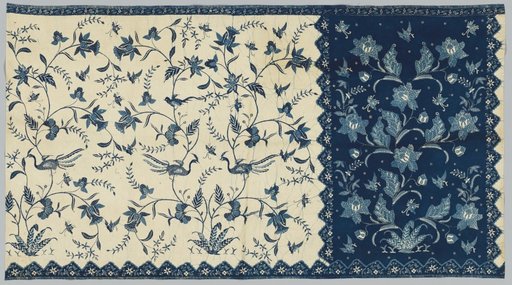
Sarong
From the collection of Cleveland Museum of Art. Free to download, adapt and use — no permission needed.
About this work
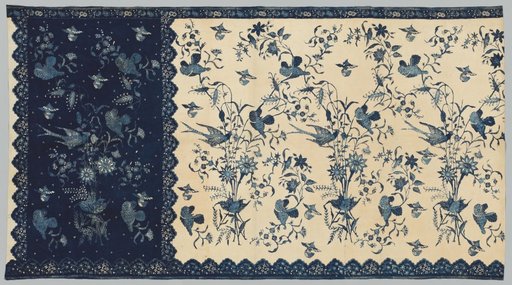
Batiks made in the North Coast region of Java, specifically in Pekalongan, were influenced by both Indian and European motifs due to the Dutch presence in Indonesia. In this sarong we see a mixture of Indian and European flowers including jasmine, lilac, and daffodil. Batik is a wax-resist dyeing technique used throughout Java. Hot wax is applied with a tool known as a canting and a design is hand drawn with incredible skill. This sarong was then dyed with indigo, a well sought after and culturally important natural dye. Areas on the fabric with wax will not accept the indigo dye, hence the term wax-resist.
Cleveland Museum of Art’s own descriptionCredit lineSarong, mid-1800s. Indonesia, Java, North Coast, mid-19th century. Cotton: plain weave, wax-resist dyed (batik); overall: 106 x 192.4 cm (41 3/4 x 75 3/4 in.). The Cleveland Museum of Art, Gift of Mrs. James J. Tracy, 1917.26