Mirror
From the collection of Cleveland Museum of Art. Free to download, adapt and use — no permission needed.
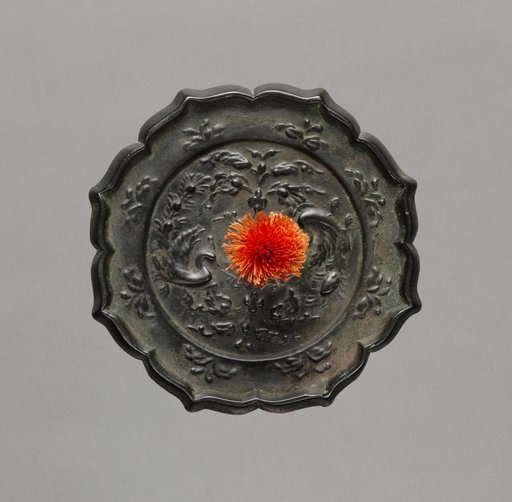
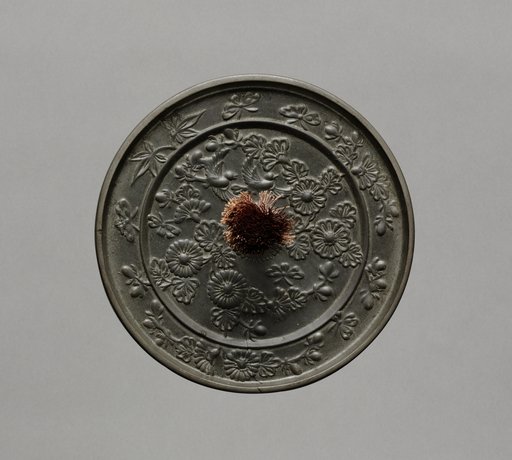
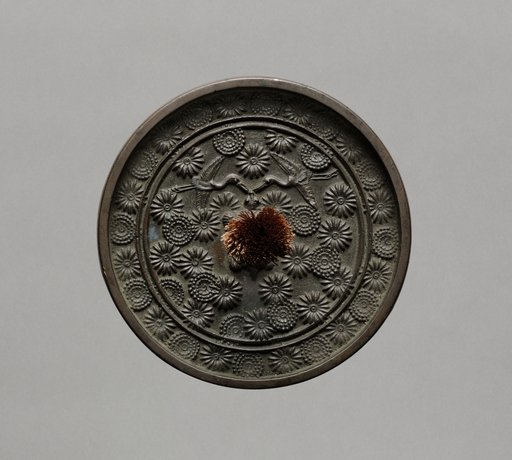
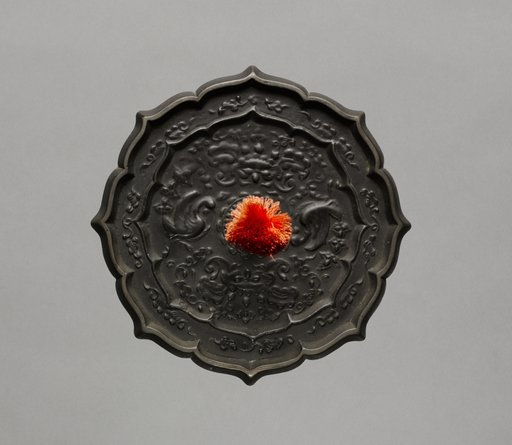
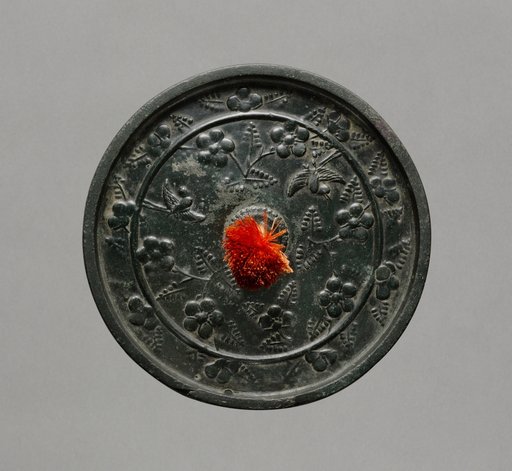
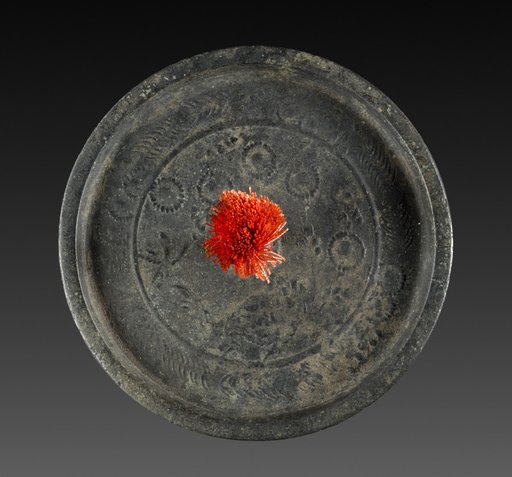
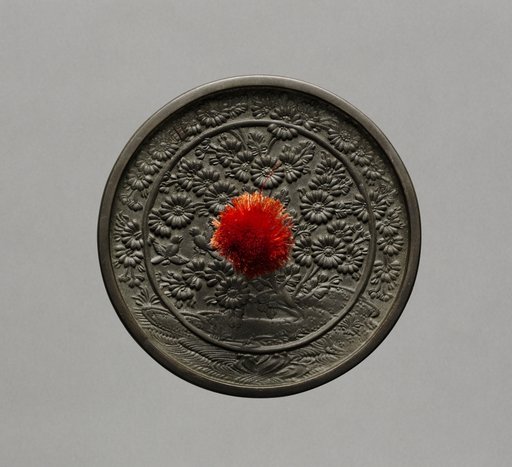
The Japanese used chrysanthemums as decorative elements on mirrors. In the Heian period, a chrysanthemum with cranes or long-tailed birds was a common motif. Later, in the Kamakura and Muromachi periods, chrysanthemum designs were divided into three patterns with different symbolic associations: Chrysanthemum with Cranes represented longevity; Water Flowing suggested longevity as well as the Noh drama Kikujido , or Chrysanthemum Boy; and East Fence alluded to the poem "Drinking Wine" by Tao Yuanming (365–427 CE). Here, the mirror featuring Buddhist iconography ( kyojo ) and a chrysanthemum design on the back shows that the flower was also appreciated in the context of Buddhism in the Kamakura period.
Cleveland Museum of Art’s own description