CC0 · no rights reserved
Sitar
From the collection of Cleveland Museum of Art. Free to download, adapt and use — no permission needed.
About this work
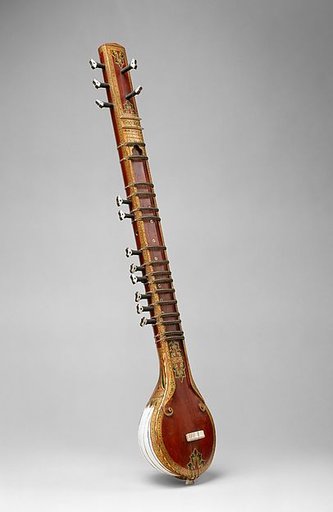
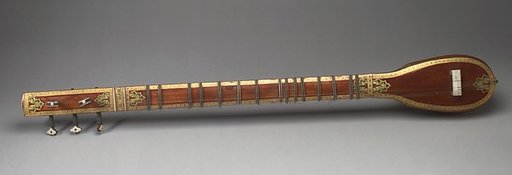
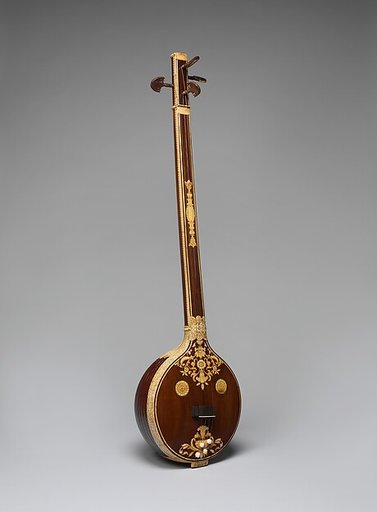
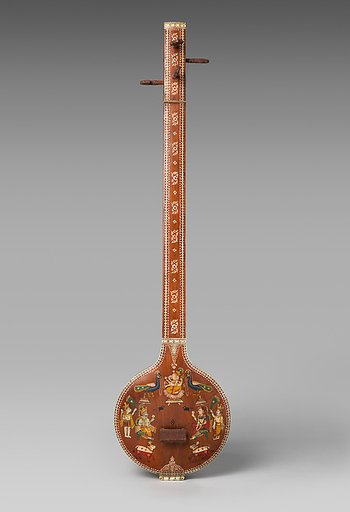
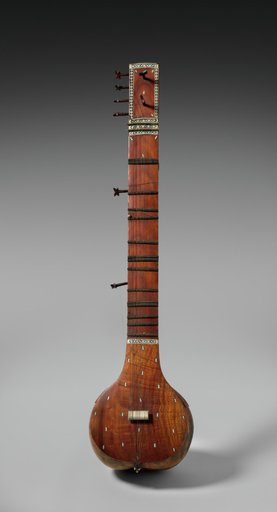
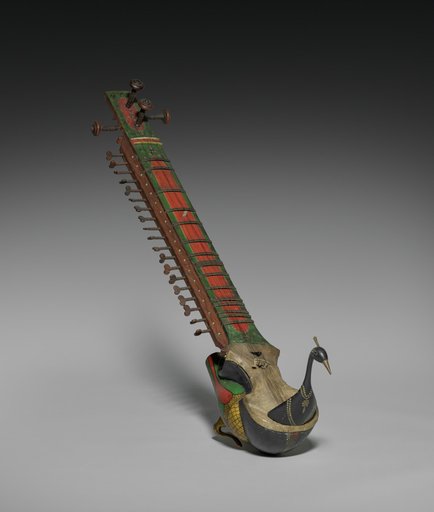
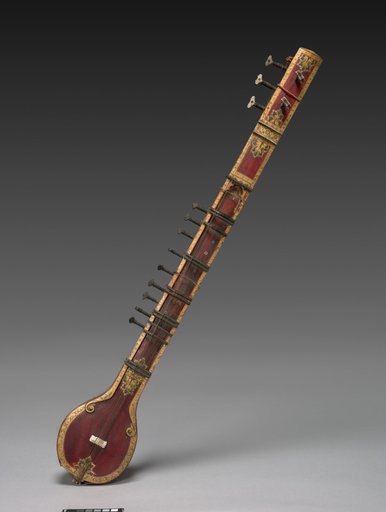
The stringed instrument known as the sitar usually provided the central sound for the musical performances that were a constant feature of court life in India. The sitar could then be accompanied by percussion, voice, and other supporting instruments. In Raja Deen Dayal’s photograph Maharaja of Rewa in Prayer ( 2016.266.21 ), a musician strums a sitar in order to please the deities on the royal altar. The improvised compositions are played in a mode, or key, that correlates to the time of day and season of the year.
Cleveland Museum of Art’s own descriptionCredit lineSitar, c. 1850. Eastern India, Bengal or Bangladesh. Gourd and wood with pigment, ivory, and bone; copper alloy: frets; iron alloy: strings (with one modern copper replacement); overall: 95.2 x 15.3 cm (37 1/2 x 6 in.). The Cleveland Museum of Art, The Charles G. King Jr. collection; Gift of Ralph King in memory of Charles G. King Jr., 1918.346