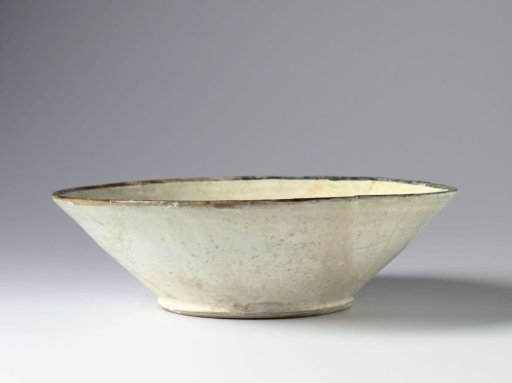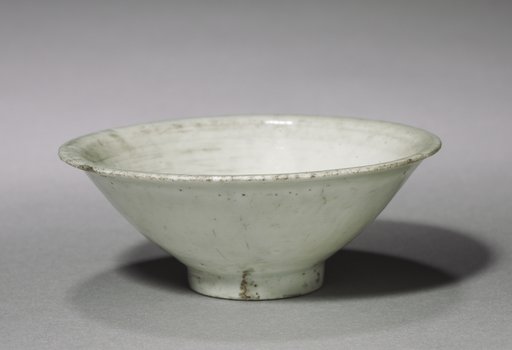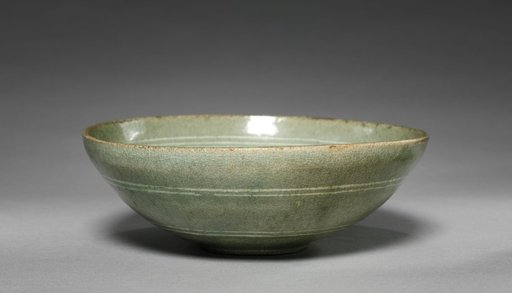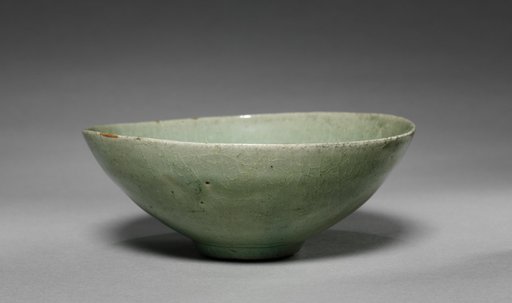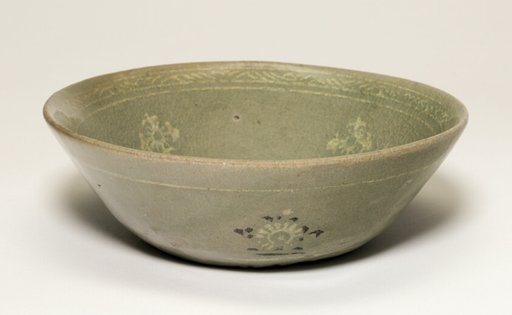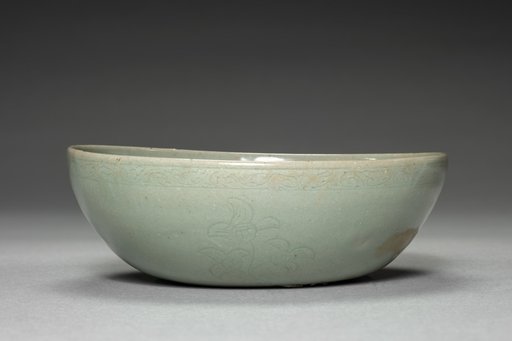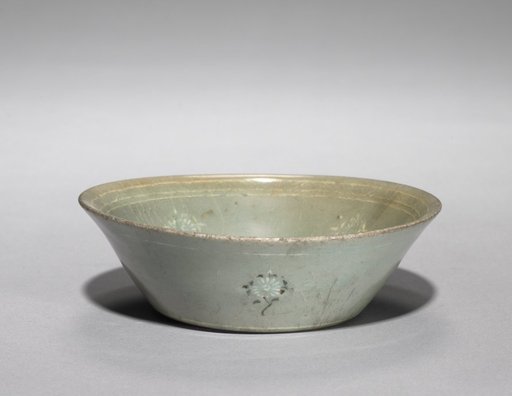
Saucer with Inlaid Chrysanthemum Design
From the collection of Cleveland Museum of Art. Free to download, adapt and use — no permission needed.
During the Goryeo period (918–1392), about 260 kilns operated in mainly Jeolla and Chungcheong provinces, meeting a high consumer demand. Celadon wares for everyday use such as this dish were among the most common burial objects in elites' tombs. Furnishing tombs with an elaborate assemblage of objects was believed to honor and comfort the newly dead. Generally, Goryeo tombs were left untouched until the late 19th century. During the colonial period (1910–45), however, Japanese archaeologists competitively excavated the tombs located in Kaeseong, the former capital of the Goryeo period, and these wares soon became available for Japanese and Western collectors.
Cleveland Museum of Art’s own description