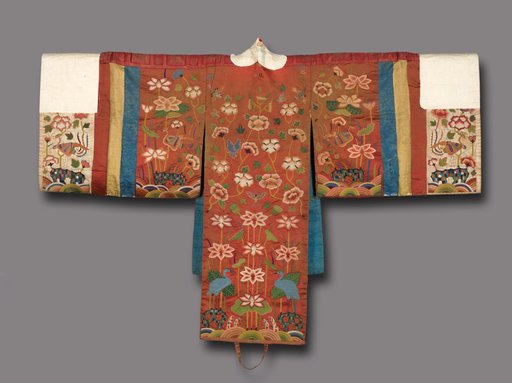
Bridal Robe (Hwarot)
From the collection of Cleveland Museum of Art. Free to download, adapt and use — no permission needed.
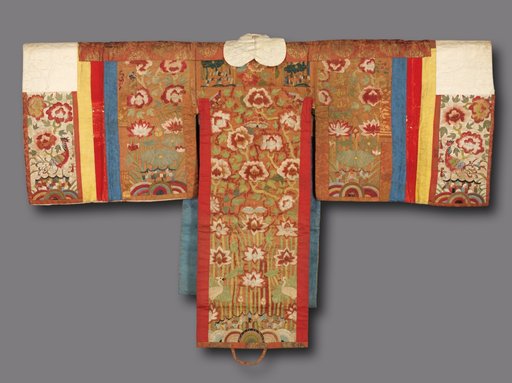
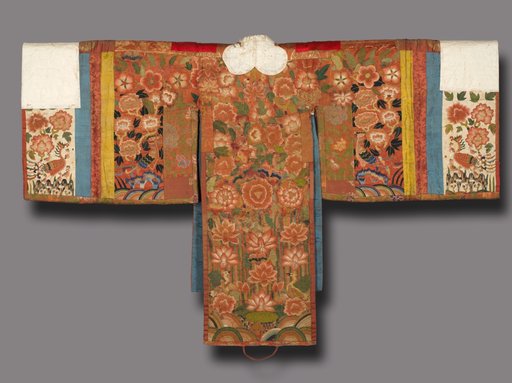
This bride's robe is exquisitely embroidered with various symbols of happiness in colorful silk threads. Butterflies stand for marital happiness; the phoenix, numerous offspring; and lotus flowers and white cranes, longevity. Yet, the bridal robe does not attest to the life of luxury. To the contrary, many traces of repairs, trimmings, and patchwork, reflect Joseon period women’s commitment to value neo-Confucian aesthetics of frugality and modesty. Substantial repairs and patching reveal that this robe served as an important communal resource to be shared and passed down through several generations. Its collar and sleeves are covered in thick white paper; this paper is replaced with new paper for each bride, while the robe itself was reused for decades.
Cleveland Museum of Art’s own description