CC0 · no rights reserved
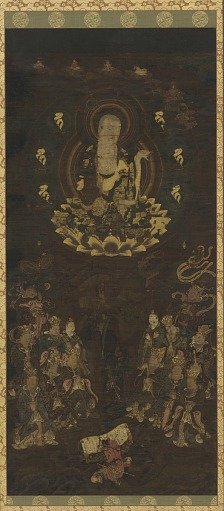
The Bosatsu Jizo and Ten Kings of Hell
From the collection of National Museum of Asian Art (Freer/Sackler). Free to download, adapt and use — no permission needed.
About this work
The bosatsu (bodhisattva) Jizo is one of the most easily recognized figures in Japanese Buddhist iconography. The young, demure, shaven-pate monk was revered as a manifestation of the Buddha's concern and compassion for children, warriors, travelers, women in childbirth, and those suffering in hell. In the period of social chaos and warfare that swept through Japan in the late twelfth century and again in the fourteenth century, the cult of Jizo expanded widely, and his image can be observed in a variety of settings in both painting and sculpture.
National Museum of Asian Art (Freer/Sackler)’s own descriptionSubjects
Credit lineThe Bosatsu Jizo and Ten Kings of Hell. 1185-1333. National Museum of Asian Art (Freer/Sackler), Gift of Charles Lang Freer. CC0.
Similar works
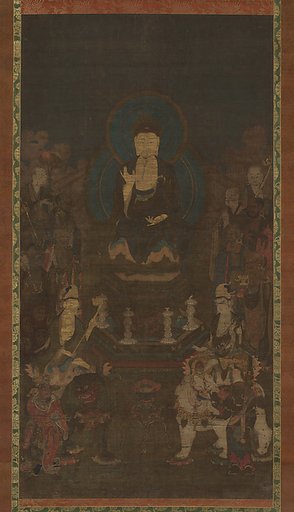 Shaka (Shakyamuni), the Historical Buddha, with Two Attendant Bodhisattvas and the Ten Great Disciples
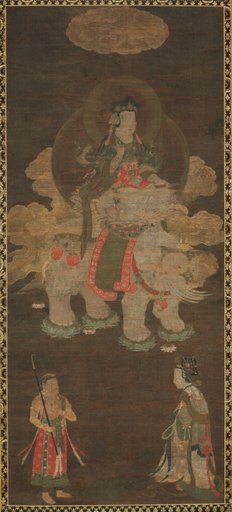 Shakyamuni Triad: Buddha Attended by Manjushri and Samantabhadra (Bodhisattva with Elephant)
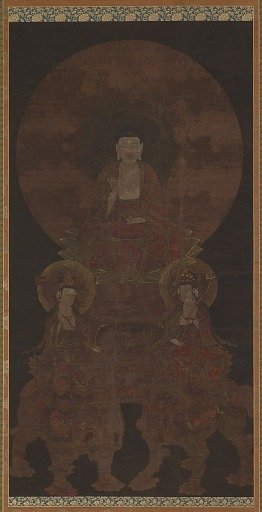 Historical Buddha Shakyamuni with the bodhisattvas Fugen (Samantabhadra) and Monju (Manjushri)
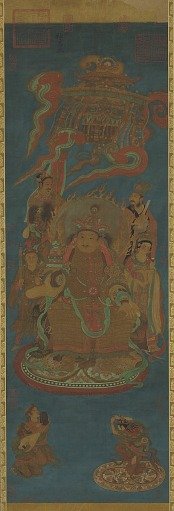 Vaisravana, Guardian King of the North
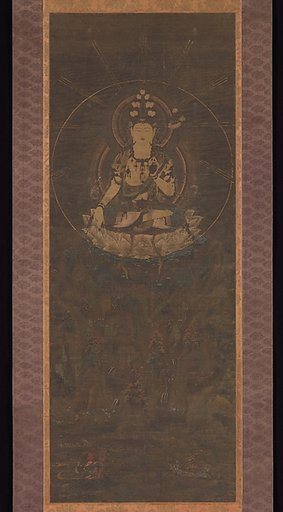 Eleven-Headed Kannon on Mount Fudaraku
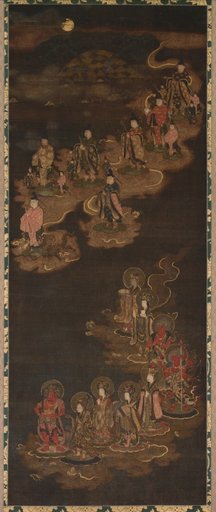 Descent of the Nine Luminaries and the Seven Stars at Kasuga