CC0 · no rights reserved
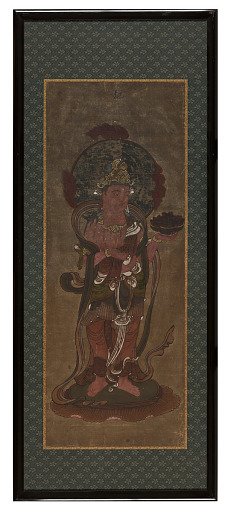
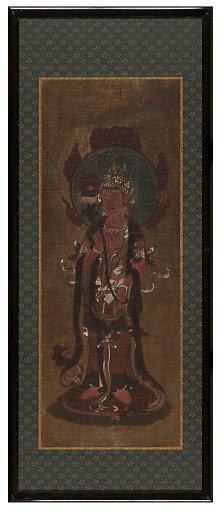
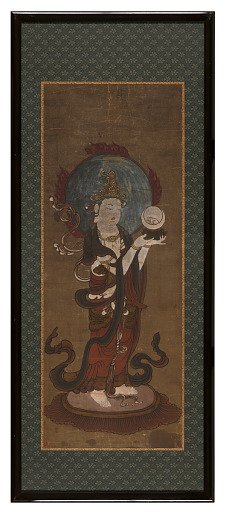
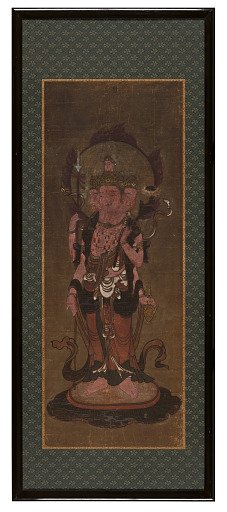
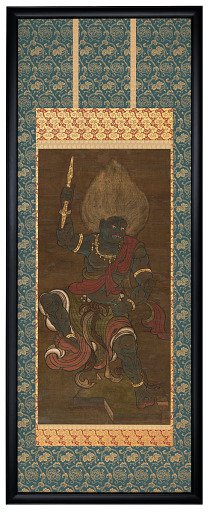
Yaksa form of Vajrapani (Blue Fudo)
From the collection of National Museum of Asian Art (Freer/Sackler). Free to download, adapt and use — no permission needed.
About this work
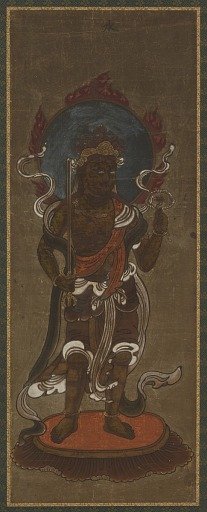
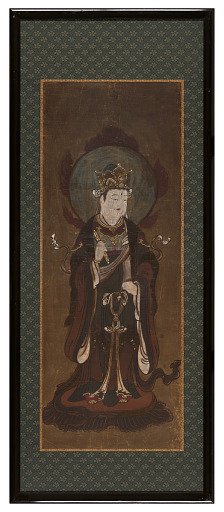
Wielding a vajra, an implement named for its diamond-like hardness, this deity presents a fearsome image intended to dispel evil thoughts and actions. It probably represents Zao Gongen, a deity especially revered by practitioners of Shugendo, a religious order that conducts ascetic practices in the mountains to attain magical powers, especially those for exorcism and healing. Known as yamabushi, practitioners of Shugendo combine practices of esoteric Buddhism with beliefs in mountains as sacred places, a native Japanese idea that preceded and coexisted with Buddhism.
National Museum of Asian Art (Freer/Sackler)’s own descriptionSubjects
Credit lineYaksa form of Vajrapani (Blue Fudo). 13th-14th century. National Museum of Asian Art (Freer/Sackler), Gift of Charles Lang Freer. CC0.