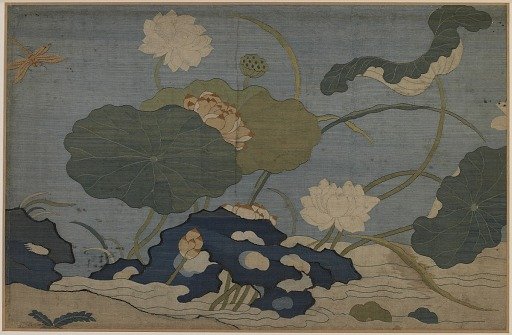
Dragonfly and lotus plants
From the collection of National Museum of Asian Art (Freer/Sackler). Free to download, adapt and use — no permission needed.
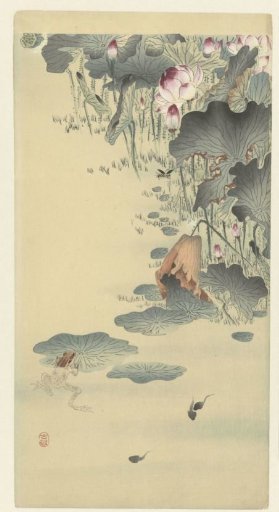
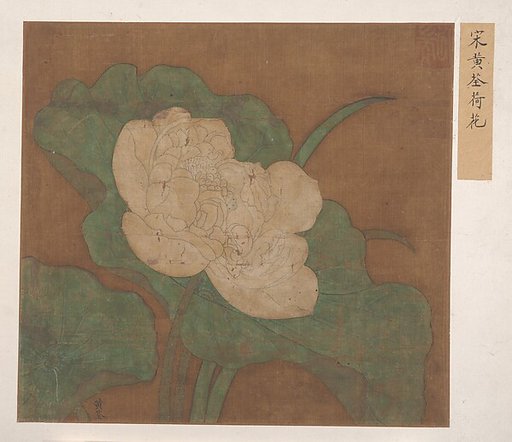
Strong graphic designs with vibrant colors are among the best tapestries of the Ming dynasty (1368-1644). The use of large blocks of color to create a bold design corresponds to a similar visual effect in fahua ceramics and in cloisonne. This composition of lotuses features one of the most respected and beloved flowers in Chinese lore. Rising fragrant and unsoiled out of muddy water, the lotus symbolizes purity, integrity, and the idea of spiritual transcendence in the Buddhist tradition. It also carries another meaning-peace-based on the pronunciation of "lotus" in Chinese, "he," which sounds like a differently written word that means "peace." The dragonfly (qingting) adds another pun with words for "dragonfly" and "clear" sounding alike. Thus this image suggests clear, peaceful waters, which served as a rebus for the stability of the Ming government.
National Museum of Asian Art (Freer/Sackler)’s own description