CC0 · no rights reserved
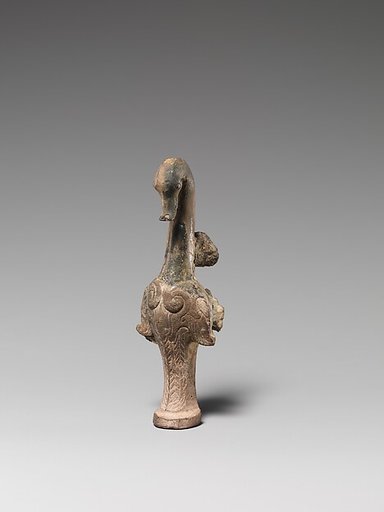
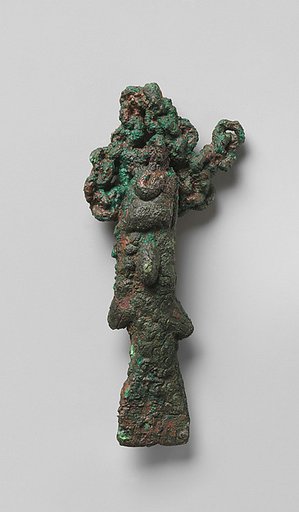
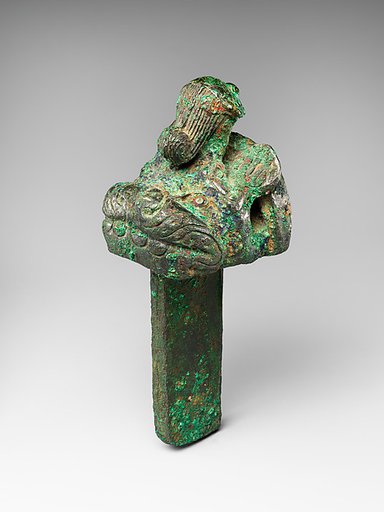
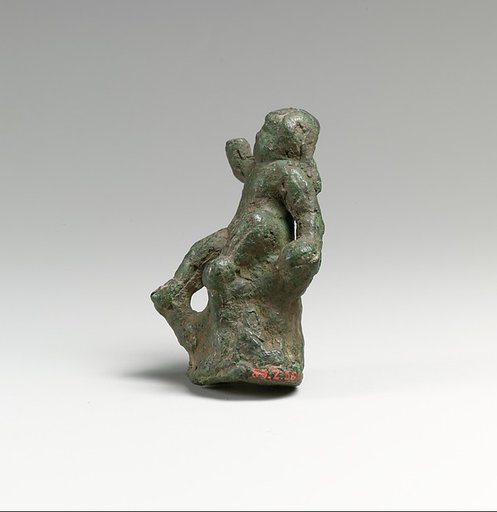
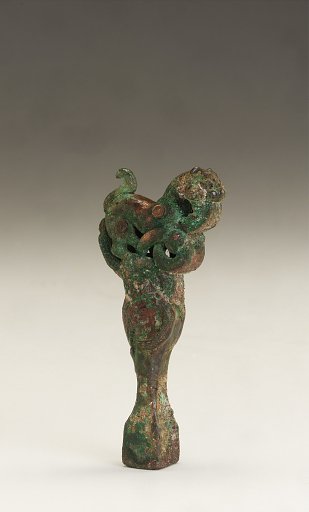
Qin tuning key (<em>qin zhenyao</em>) with tiger and snake
From the collection of National Museum of Asian Art (Freer/Sackler). Free to download, adapt and use — no permission needed.
About this work
Several types of zithers were played in ancient China. The earliest (the se, zheng, and zhu) used movable bridges for tuning, but the qin, a seven-stringed zither that evolved between the fifth and second century B.C.E., has tuning pegs on the underside that are turned with a metal key. The decoration of these tuning keys-combative animals and a bear native to China's northern territory-may have been inspired by the goods traded with seminomadic peoples along China's northern frontier. Some scholars believe this may indicate that the qin developed, at least in part, in response to foreign musical traditions.
National Museum of Asian Art (Freer/Sackler)’s own descriptionSubjects
Credit lineQin tuning key (<em>qin zhenyao</em>) with tiger and snake. 5th century BCE. National Museum of Asian Art (Freer/Sackler), Gift of Charles Lang Freer. CC0.