Public domain
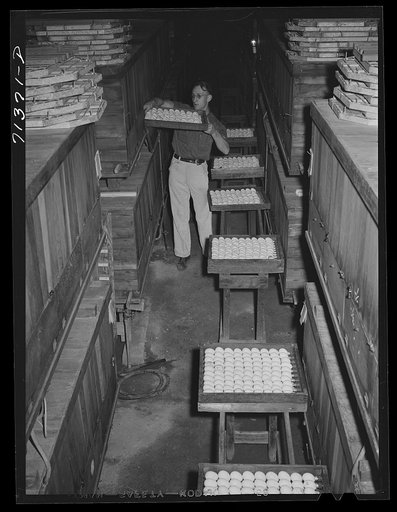
"[Untitled photo, possibly related to: Petaluma, Sonoma County, California. Putting eggs into an incubator at a hatchery. In 1878, Lyman Ryce, a young Canadian, decided that the country around Petaluma was well adapted to poultry raising and egg production, and founded the industry. He conceived th
From the collection of Library of Congress. Free to download, adapt and use — no permission needed.
Credit line"[Untitled photo, possibly related to: Petaluma, Sonoma County, California. Putting eggs into an incubator at a hatchery. In 1878, Lyman Ryce, a young Canadian, decided that the country around Petalu. 1942-01-01. Lee, Russell. Farm Security Administration/Office of War Information Collection, Library of Congress. Public domain.
Similar works
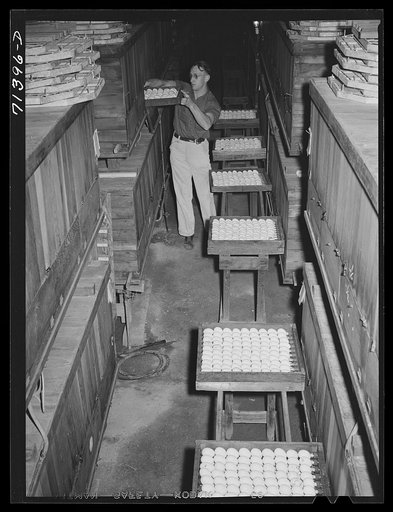 Petaluma, Sonoma County, California. Putting eggs into an incubator at a hatchery. In 1878, Lyman Ryce, a young Canadian, decided that the country around Petaluma was well adapted to poultry raising and egg production, and founded the industry. He conceived the idea of artificial incubation and live
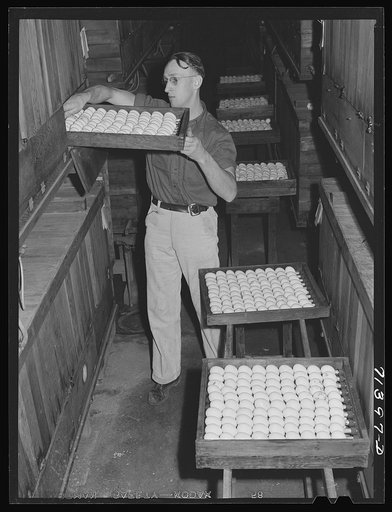 Petaluma, Sonoma County, California. Putting eggs into an incubator at a hatchery. In 1878, Lyman Ryce, a young Canadian, decided that the country around Petaluma was well adapted to poultry raising and egg production and founded the industry. He conceived the idea of artificial incubation and lived
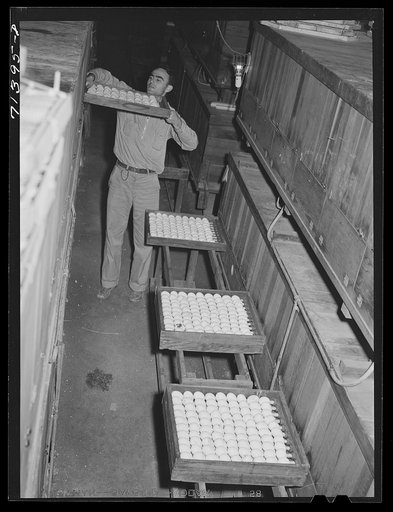 Untitled photo, possibly related to: Petaluma, Sonoma County, California. Putting eggs into an incubator at a hatchery. In 1878, Lyman Ryce, a young Canadian, decided that the country around Petaluma was well adapted to poultry raising and egg production, and founded the industry. He conceived the i
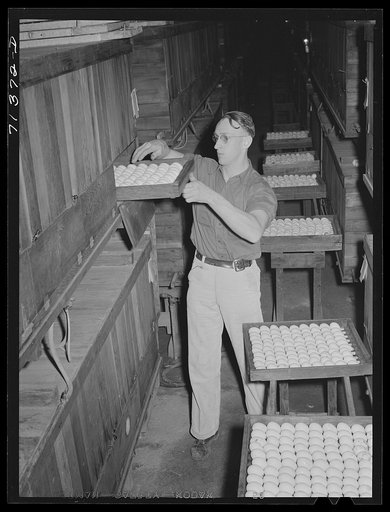 Untitled photo, possibly related to: Petaluma, Sonoma County, California. Putting eggs into an incubator at a hatchery. In 1878, Lyman Ryce, a young Canadian, decided that the country around Petaluma was well adapted to poultry raising and egg production and founded the industry. He conceived the id
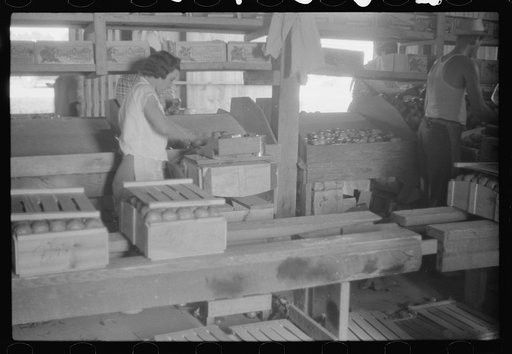 Untitled photo, possibly related to: Florida tomato wrappers at work in Kings Creek Packing Company, Kings Creek, Maryland
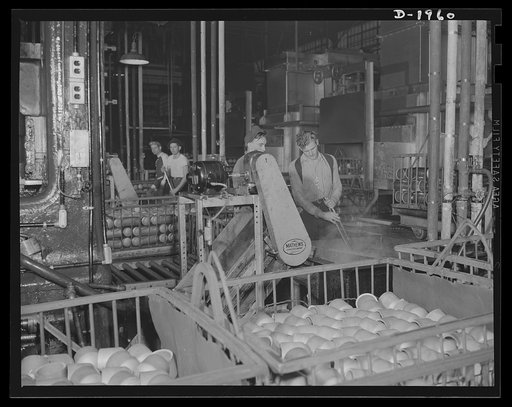 Three-inch A.A. cartridge cases. Cartridge cases for three-inch antiaircraft shells are produced by a series of operations that transform a flat brass disc into a case ready for loading with propelling charge and shell. Between each operation there is careful washing to remove all scale and adhesion