Public domain
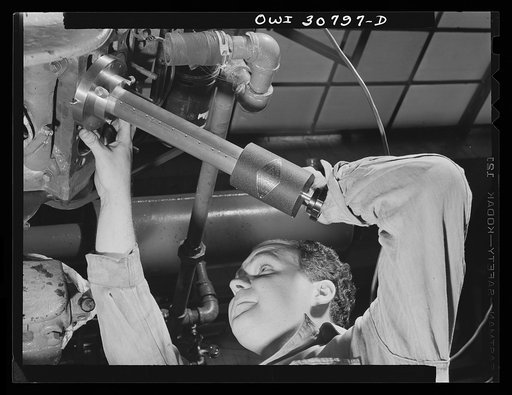
Substitute fuels tested. Conducting an experiment to determine whether engine wear is increased by the use of fuel substitutes, Emmet L. Reed of Washington, D.C. makes an identification mark on the cylinder of an automobile engine. The rate of the mark's disappearance will determine the degree of we
From the collection of Library of Congress. Free to download, adapt and use — no permission needed.
Credit lineSubstitute fuels tested. Conducting an experiment to determine whether engine wear is increased by the use of fuel substitutes, Emmet L. Reed of Washington, D.C. makes an identification mark on the cy. 1935-01-01. Rosener, Ann. Farm Security Administration/Office of War Information Collection, Library of Congress. Public domain.
Similar works
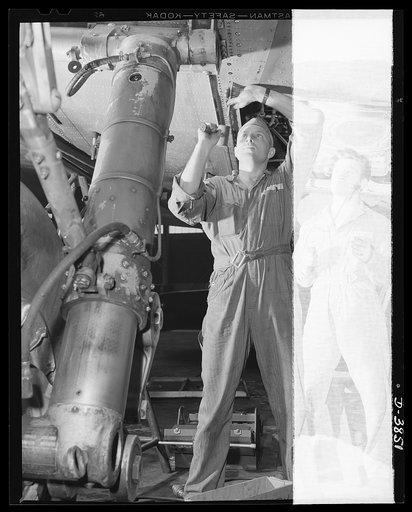 YB-17 bombardment squadron, Langley Field, Virginia. More fuel-storage space for a mighty aerial warship. A master sergeant of a bombardment squadron at Langley Field, Virginia installs gasoline tanks in the lower section of a wing of a YB-17 bomber
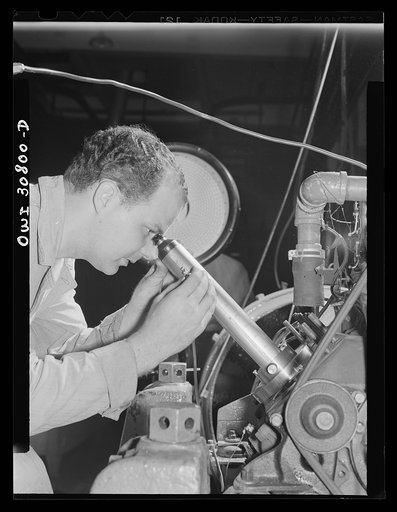 Substitute fuels tested. Emmet L. Reed, laboratory assistant at the U.S. Bureau of Standards, uses a special microscope to measure the degree of wear which substitute gasoline has produced on an automobile engine cylinder
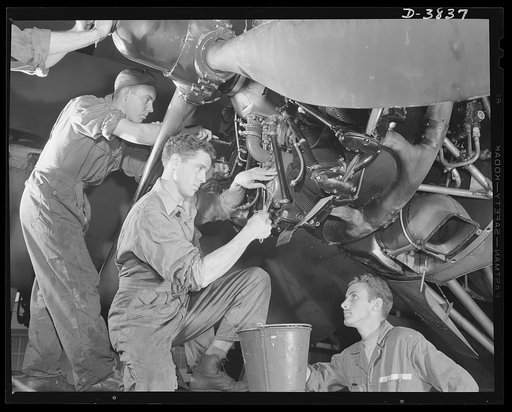 YB-17 bombardment squadron, Langley Field, Virginia. Tuning a bomber engine requires knowledge and skill. These three corporals of a bombardment squadron at Langley Field, Virginia are making adjustments that will put a mighty YB-17 bomber in the pink of condition
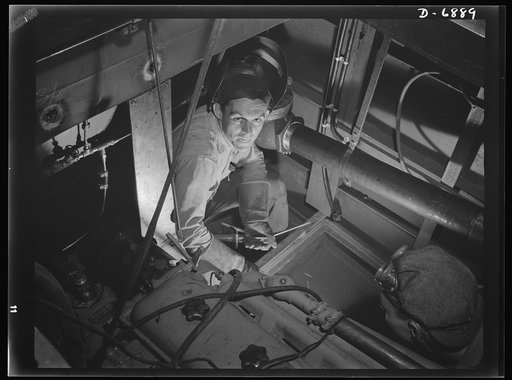 Production. Fifty-foot steel ramp boats. Mounting the power plant of a fifty-foot steel ramp boat in a Southern boatyard. This ramp boat, which will be used in landing men, tanks and other equipment on hostile shores, is powered by twin diesel engines. At this same boat yard are made torpedo boats,
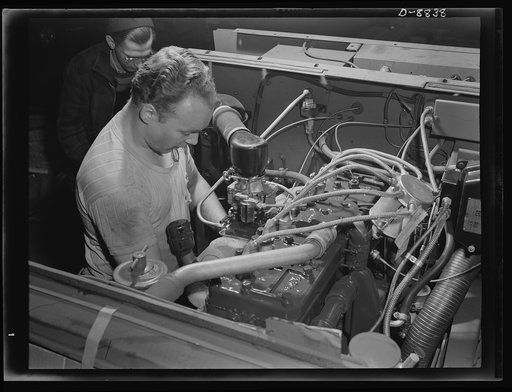 Production. Halftrac armoured cars. The engine of a halftrac scout car receives final inspection as it leaves the assembly line of the plant in which the body was made and mounted. This plant formerly produced locks and safes. Diebold Safe and Lock Company, Canton, Ohio
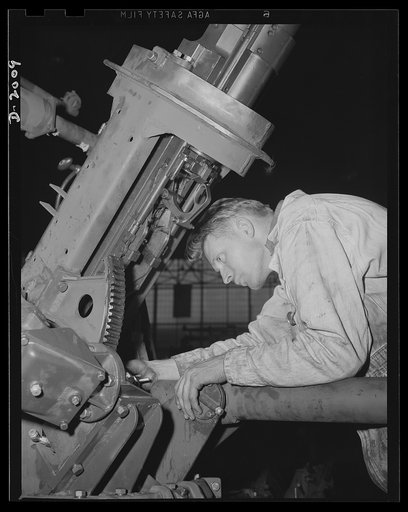 Antiaircraft gun carriage. Assembling the elevating mechanism of a thirty-seven-millimeter antiaircraft gun carriage. This and other control mechanisms of an anti-aircraft gun mounting must operate as easily as your automobile controls so that the gunner may stay trained on his swiftly moving target