Public domain
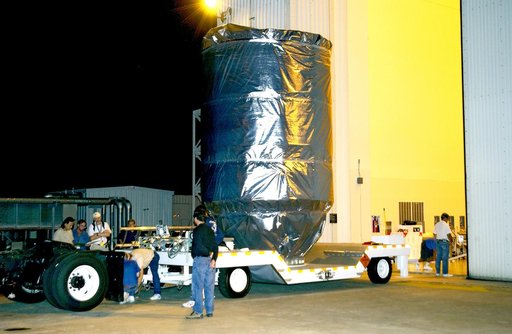
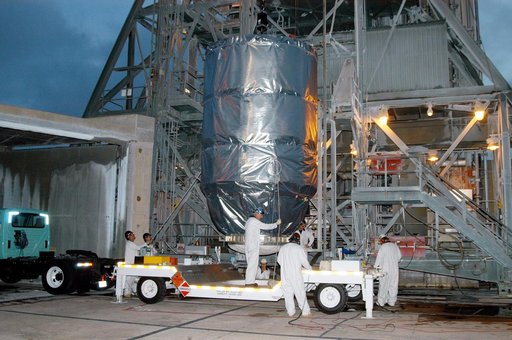
KENNEDY SPACE CENTER, FLA. - The Mars Exploration Rover 2 (MER-2), inside the transport canister, is ready for transfer to Launch Pad 17-A, Cape Canaveral Air Force Station. At the pad it will be mated to the Delta II rocket for launch. MER-2 is one of NASA's twin Mars Exploration Rovers designed
From the collection of NASA Image and Video Library. Free to download, adapt and use — no permission needed.
About this work
Kennedy Space Center, Fla. — The Mars Exploration Rover 2 (MER-2), inside the transport canister, is ready for transfer to Launch Pad 17-A, Cape Canaveral Air Force Station. At the pad it will be mated to the Delta II rocket for launch. MER-2 is one of NASA's twin Mars Exploration Rovers designed to study the history of water on Mars.
NASA Image and Video Library’s own descriptionCredit lineKENNEDY SPACE CENTER, FLA. - The Mars Exploration Rover 2 (MER-2), inside the transport canister, is ready for transfer to Launch Pad 17-A, Cape Canaveral Air Force Station. At the pad it will be mated to the Delta II rocket for launch. MER-2 is one of NASA's twin Mars Exploration Rovers designed to study the history of water on Mars. These robotic geologists are equipped with a robotic arm, a drilling tool, three spectrometers, and four pairs of cameras that allow them to have a human-like, 3D view of the terrain. Each rover could travel as far as 100 meters in one day to act as Mars scientists' eyes and hands, exploring an environment where humans can't yet go. MER-2 is scheduled to launch no earlier than June 8 as MER-A.. NASA/KSC, 2003-05-27. Public domain. ID: KSC-03pd1712.
Similar works
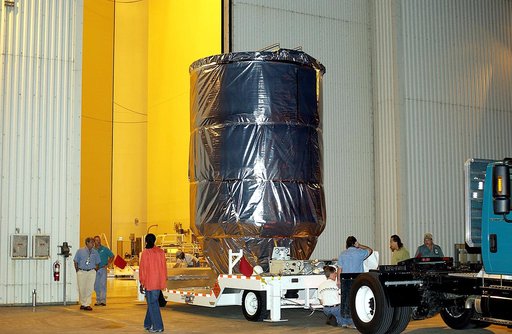 KENNEDY SPACE CENTER, FLA. - The Mars Exploration Rover 1 (MER-B) is moved out of the Payload Hazardous Servicing Facility for transfer to Launch Pad 17-B, Cape Canaveral Air Force Station. The second of twin rovers being sent to Mars, it is equipped with a robotic arm, a drilling tool, three spe
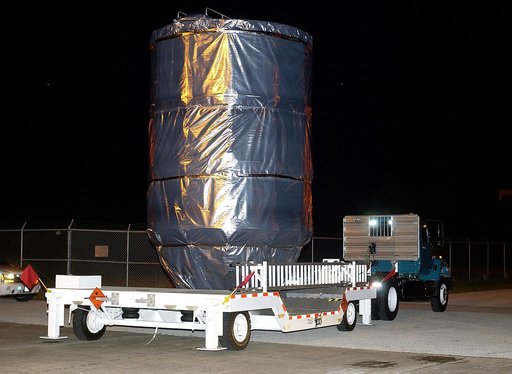 KENNEDY SPACE CENTER, FLA. - The Mars Exploration Rover 1 (MER-B) is moved out of the Payload Hazardous Servicing Facility for transfer to Launch Pad 17-B, Cape Canaveral Air Force Station. The second of twin rovers being sent to Mars, it is equipped with a robotic arm, a drilling tool, three spe
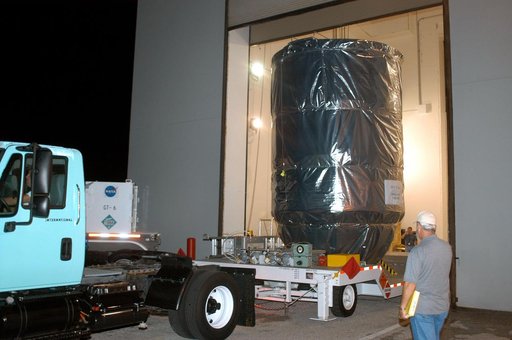 KSC-04pd1511
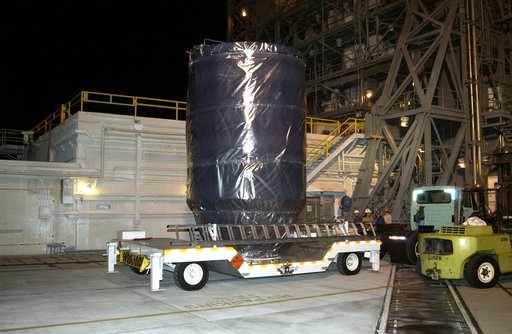 KENNEDY SPACE CENTER, FLA. - The Mars Exploration Rover 2 (MER-2), inside the transport canister, has arrived at Launch Pad 17-A, Cape Canaveral Air Force Station, where it will be mated to the Delta II rocket for launch. MER-2 is one of NASA's twin Mars Exploration Rovers designed to study the his
 KSC-04pd1514
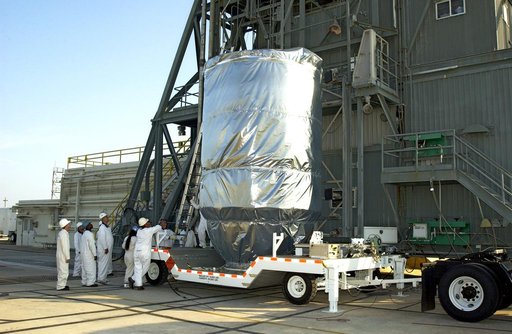 KENNEDY SPACE CENTER, FLA. - The Mars Exploration Rover 2 (MER-2), inside the transport canister, will be lifted up the launch tower on Launch Pad 17-A, Cape Canaveral Air Force Station, where it will be mated to the Delta II rocket for launch. MER-2 is one of NASA's twin Mars Exploration Rovers de