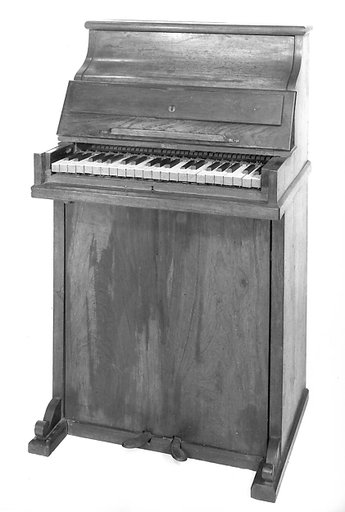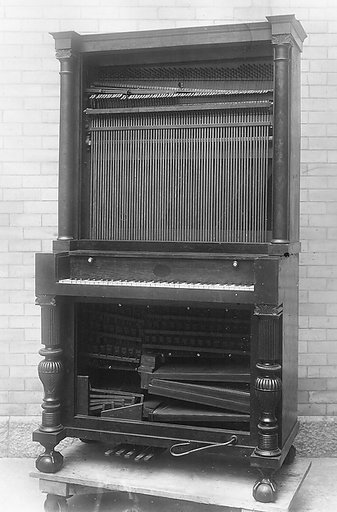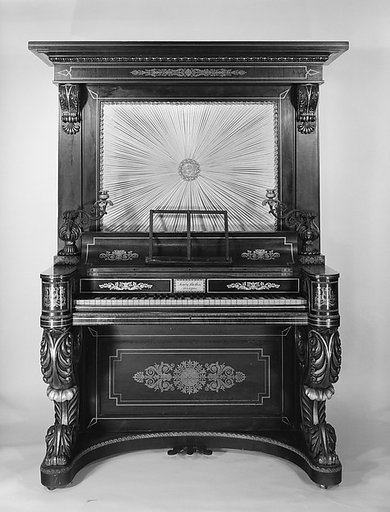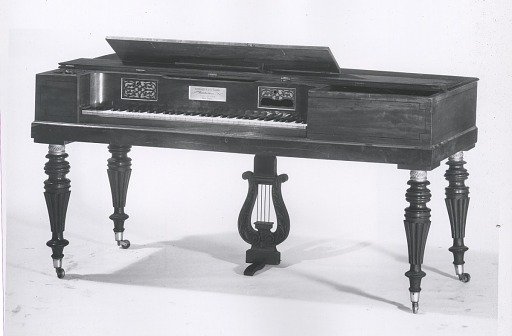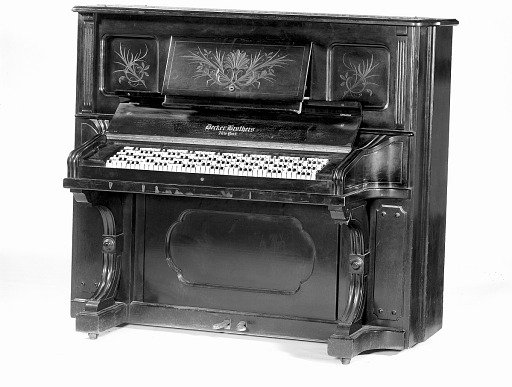
Decker Brothers Upright Piano with Jankó Keyboard
From the collection of National Museum of American History. Free to download, adapt and use — no permission needed.
This upright piano was made by Decker Brother in New York, New York around 1888-1892. The company made mostly uprights, and around 1890 made a number with the innovative Jankó keyboard. This style of keyboard was designed by Paul von Jankó in 1882. It features a multi-row array of keys, with each column being a semitone away from its companion columns, and each row a whole step in tone from its beginning rows. This keyboard was short-lived as it required pianists to relearn music on a new type of keyboard with totally new fingering. This piano is serial number 25184 and has a compass of AAA-c5, tape-check upright action, felt hammers, wound single-strings AAA-GG#, wound double-strings AA-E, wound triple strings F-c, plain triple-stings c#-c5, 2 pedals: “soft” and dampers, a one-piece cast-iron frame, cross-strung, and an ebonized case.
National Museum of American History’s own description