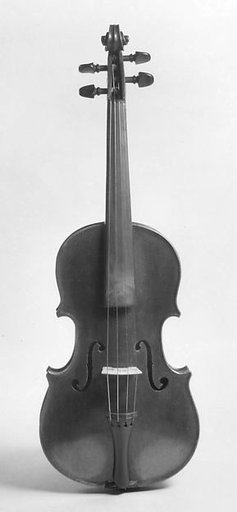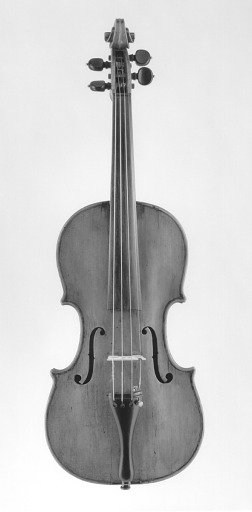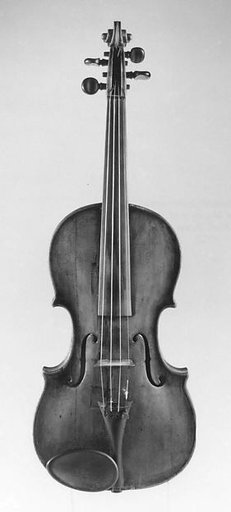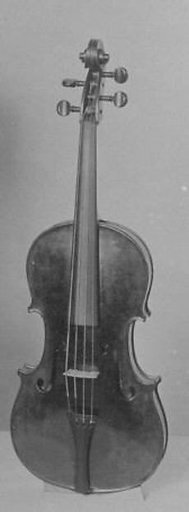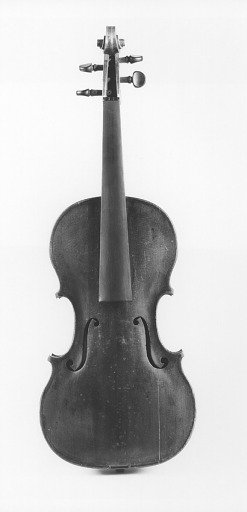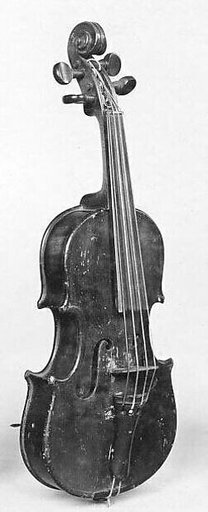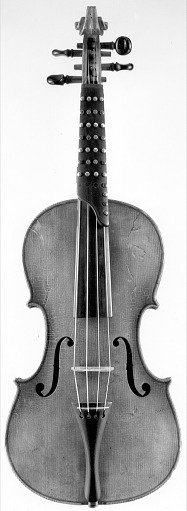
Violin Fingerboard Patent Model
From the collection of National Museum of American History. Free to download, adapt and use — no permission needed.
This keyed fingerboard was patented by William Robertson of New York, New York on November 8, 1853 and received U.S. Patent number 10,213. Robertson’s invention is for a mechanical-keyed fingerboard that is placed over the strings of a normal violin to assist amateurs. The fingerboard has thirty-two buttons that can be depressed to change pitch without bringing the fingers directly in contact with the strings. The instrument is a commercial Mirecourt violin with heavily crazed varnish made around 1850. This violin is made of a two-piece table of spruce, two-piece back of maple with even medium-fine gently descending figure, ribs of similar maple, plain field maple neck, pegbox and scroll, and a semi-opaque yellow-orange varnish.
National Museum of American History’s own description