Barbour Calculating Machine Model
From the collection of National Museum of American History. Free to download, adapt and use — no permission needed.
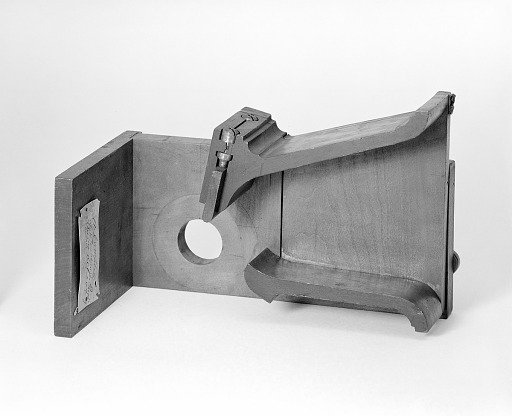
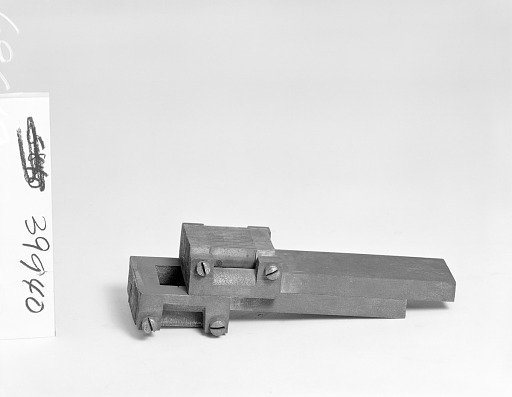
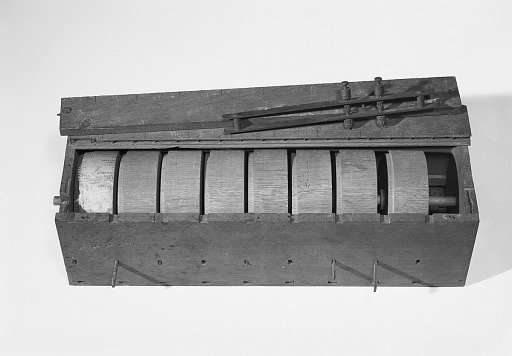
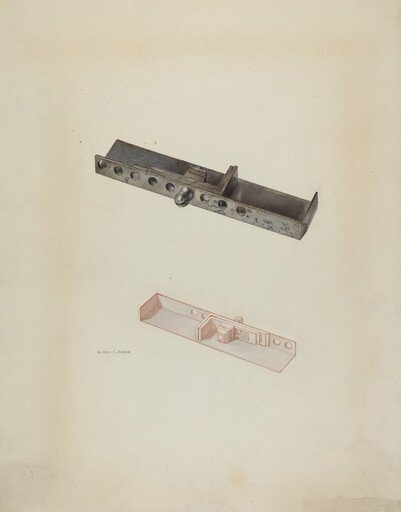
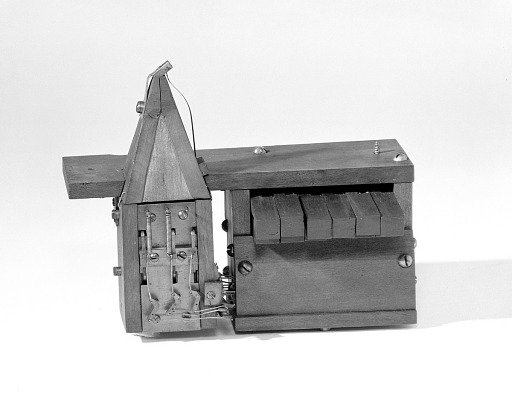
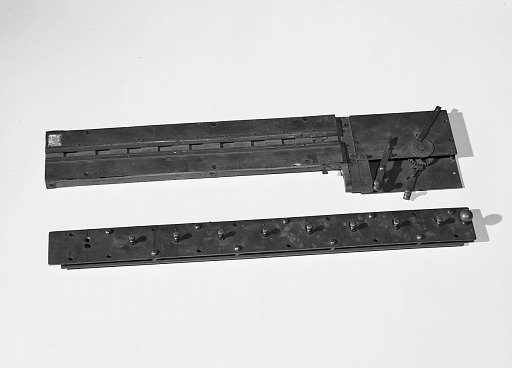
This rough model of a calculating machine that would multiply a number by a digit directly and print the result was submitted to the U.S. Patent Office by Edmund D. Barbour in 1872. It has a rectangular wooden base with nine grooves in it. The rightmost groove contains a rectangular brass plate with nine rows of teeth in it. The first row has one tooth, the second, two, and so forth. This plate has a metal handle, marked with the digits from 1 to 9, that can be pulled forward to enter a digit. It is a modification of the cylinder in Barbour’s patent 130404 (see MA.309172 ). A complete machine would have nine such plates.
National Museum of American History’s own description