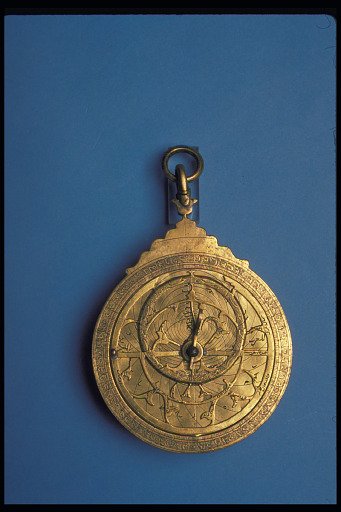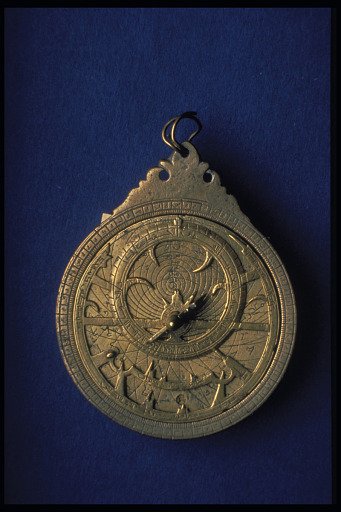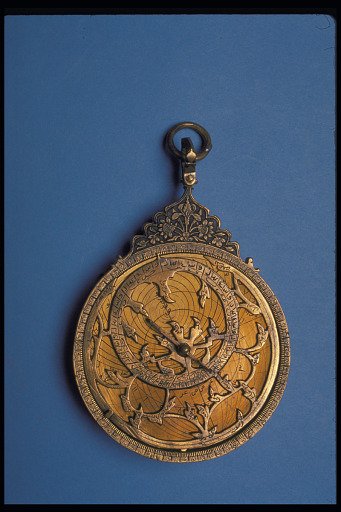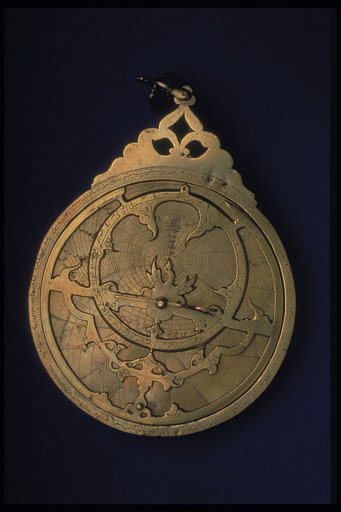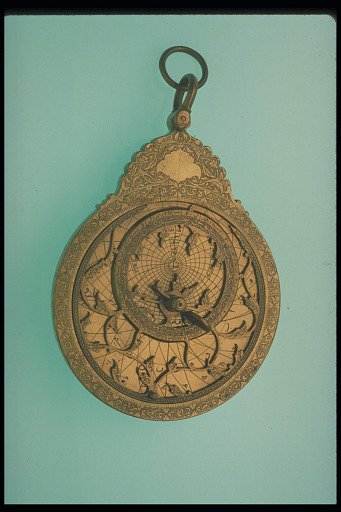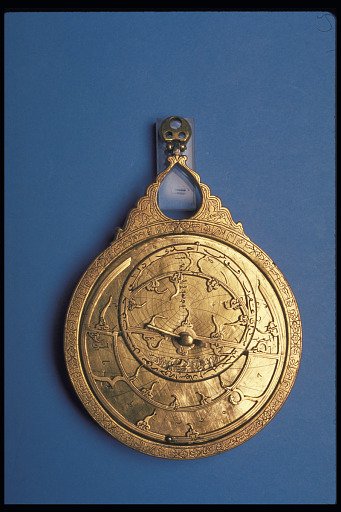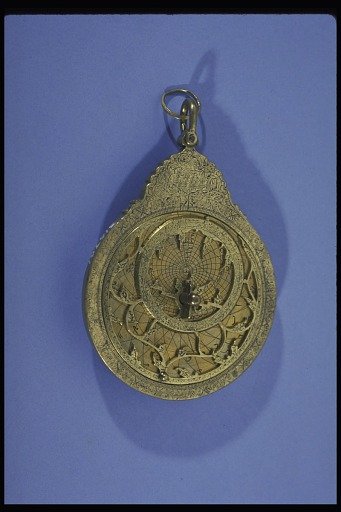
Persian Planispheric Astrolabe
From the collection of National Museum of American History. Free to download, adapt and use — no permission needed.
This astrolabe was made in the Persian city of Isfahan in about 1715. Isfahan is now in Iran. The object includes a body with throne, a handle that holds a ring for suspending the device, and five plates. One side of one plate has quarter horizons for every three degrees of latitude between twelve degrees and sixty-six degrees. The remaining faces of the plates show a stereographic projection of circles on the celestial sphere for latitudes from twenty-nine degrees to forty degrees. The astrolabe also has a rete or star map, an alidade on the back for sighting stars, a pin that passes through the center, and a wedge that holds the pin in place.
National Museum of American History’s own description