CC0 · no rights reserved
Barbour Calculating Machine
From the collection of National Museum of American History. Free to download, adapt and use — no permission needed.
About this work
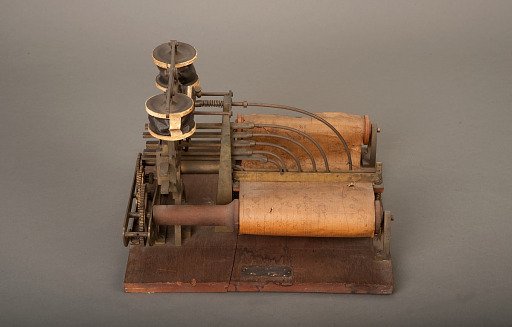
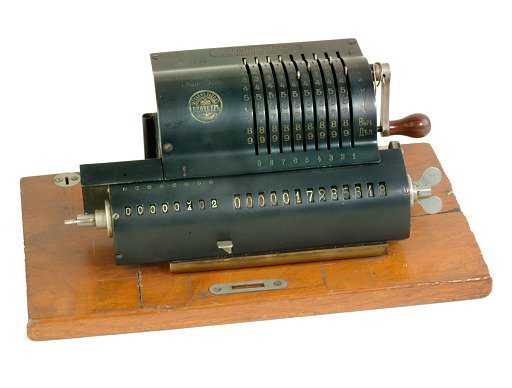
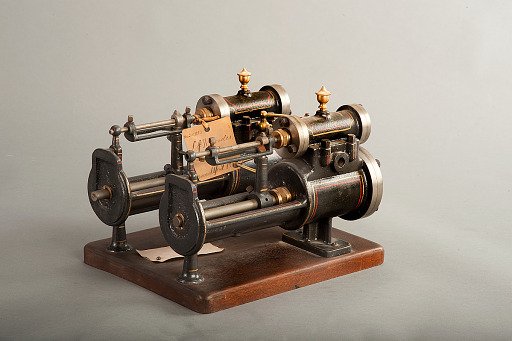
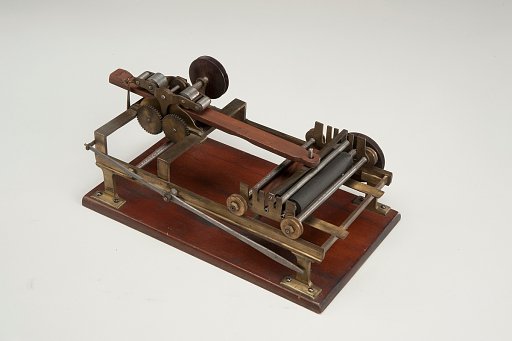
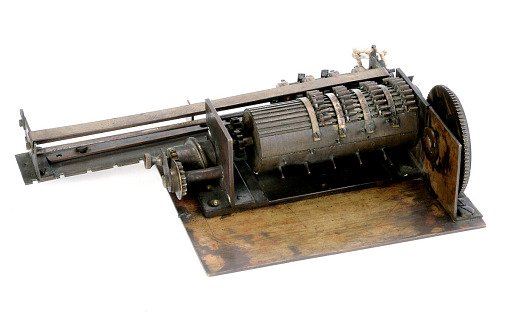
This small brass U.S. Patent Office model of a calculating machine is a modification of Edmund D. Barbour’s two earlier machines. It has a rectangular base on which is mounted crosswise a rotating cylinder. The cylinder has nine crosswise grooves that fill somewhat less than a quarter of the surface. Metal bands separate the grooves into columns, and each column has a set of nine sliding markers that fit in the grooves. Sliding these markers sets a number. There also is an array of pins around the cylinder, which is used in carrying. There are gears on both sides of the cylinder.
National Museum of American History’s own descriptionCredit lineBarbour Calculating Machine. 1875. Barbour, Edmund D.. National Museum of American History, Gift of L. Leland Locke. CC0.