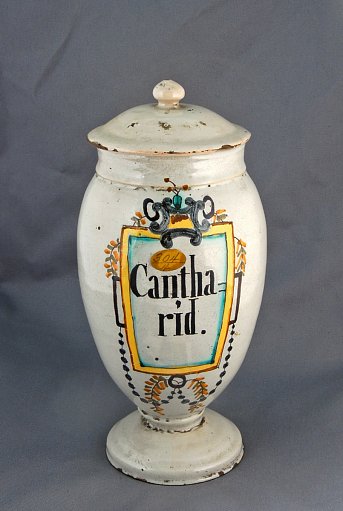
Cantha-rid
From the collection of National Museum of American History. Free to download, adapt and use — no permission needed.
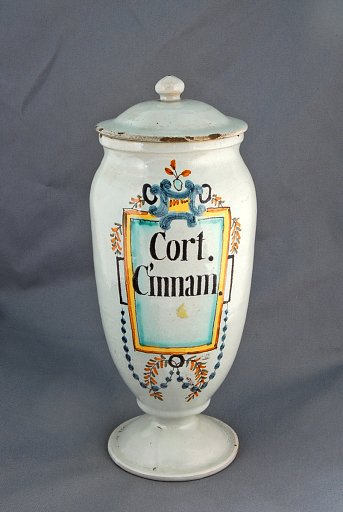
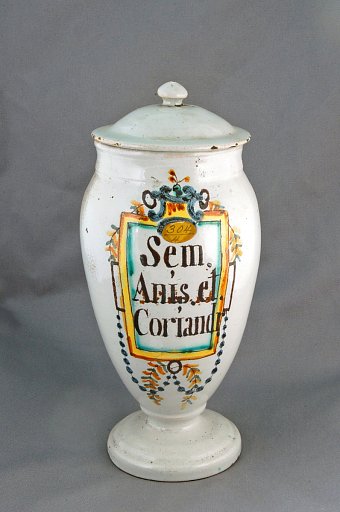
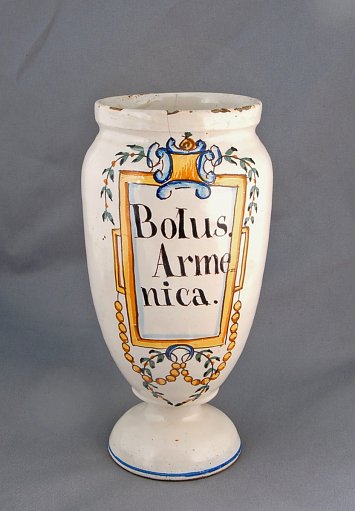
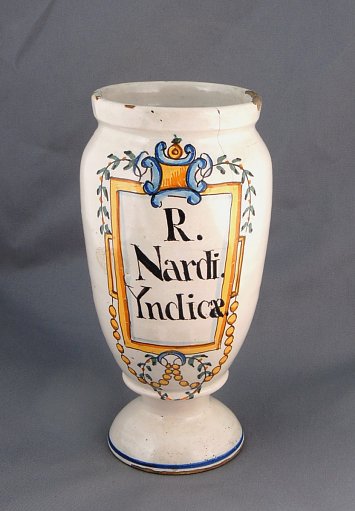
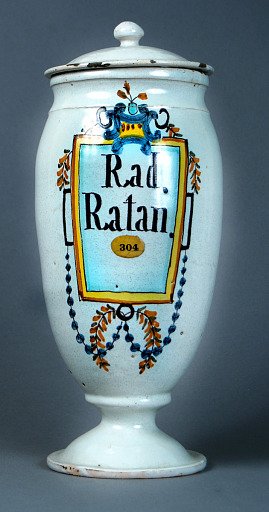
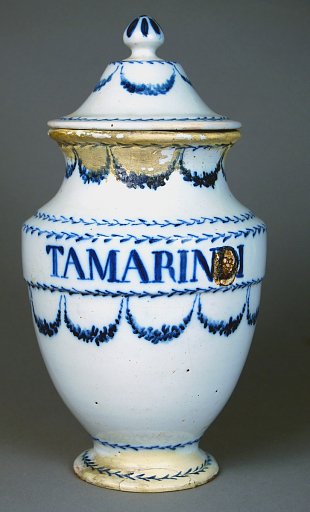
This urn–shaped drug jar has a straight neck and a round, domed foot. The lid has a cone–shaped finial. The background glaze is grayish–white. A rectangular label is formed in the center of the jar by thin lines of brown, yellow and green, topped by a small cartouche. The frame is surrounded at its top and bottom by yellow and green vines and black beads. Correspondence in 1954 between Division of Medicine Associate Curator George Griffenhagen and George Urdang notes that the jars appear to be of Catalonian–Aragonese origin. The jar’s label reads <i>Cantha rid.</i> Cantharidin is more widely known as Spanish Fly, a secretion from the male blister beetle. Cantharidin is used as an aphrodisiac and as a blistering agent, an alternative to cupping.
National Museum of American History’s own description