CC0 · no rights reserved
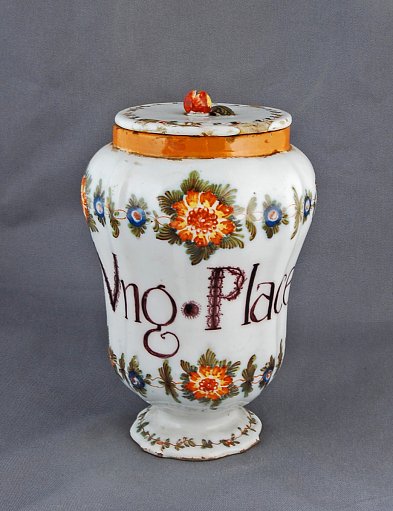
Ung Placentin
From the collection of National Museum of American History. Free to download, adapt and use — no permission needed.
About this work
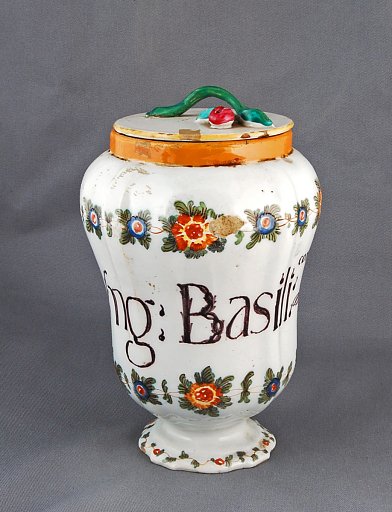
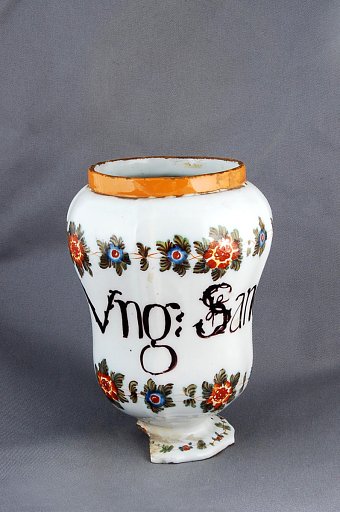
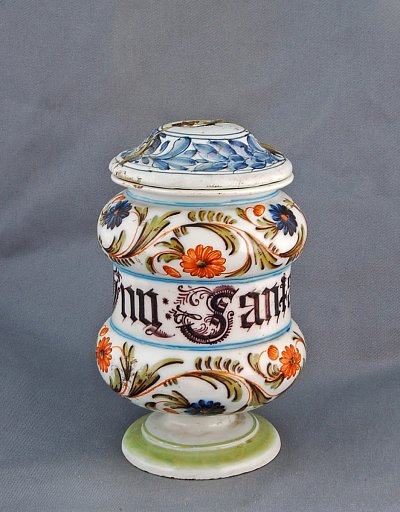
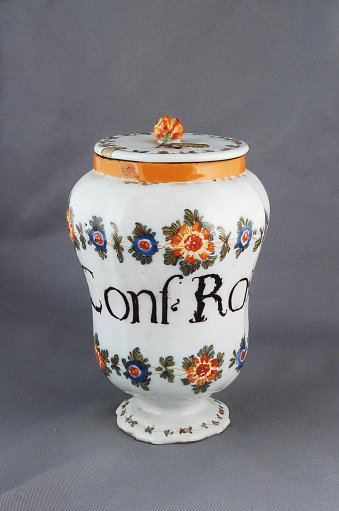
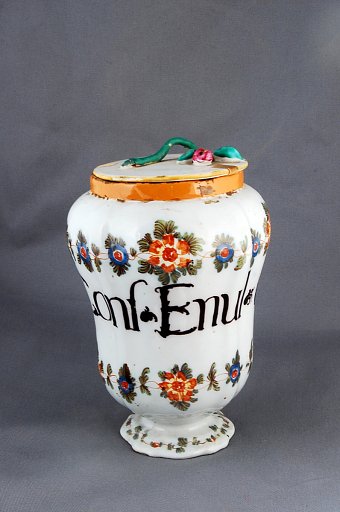
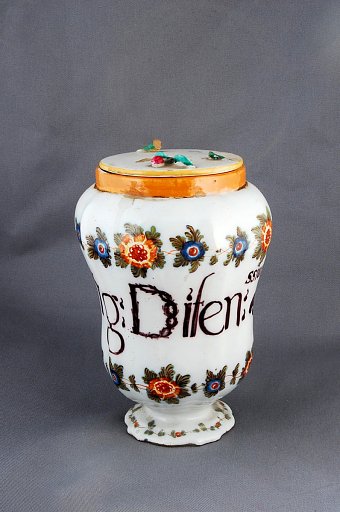
George Urdang author of <i>The Squibb Ancient Pharmacy Catalogue</i> attributes 1991.0664.681 through 1991.0664.0699 to Niderwiller a town near Strasbourg in the Alsace region of France. This baluster–shaped drug jar has a white background with two continuous rings of blue, orange, and yellow stylized flowers encircling the container at its top and bottom. The foot has a scalloped rim and a vine of tiny flowers and leaves. The is marked <i>Ung Placentin</i>. The jar would have contained a type of unguentum, or ointment, possibly made from the placenta of humans.
National Museum of American History’s own descriptionCredit lineUng Placentin. 18th century. National Museum of American History, Gift of American Pharmaceutical Association and Bristol-Myers Squibb Company. CC0.