Perkin Mauve
From the collection of National Museum of American History. Free to download, adapt and use — no permission needed.
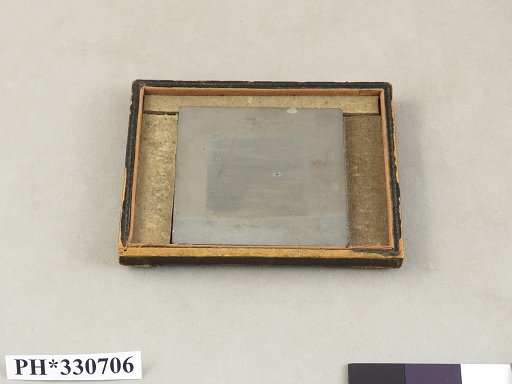
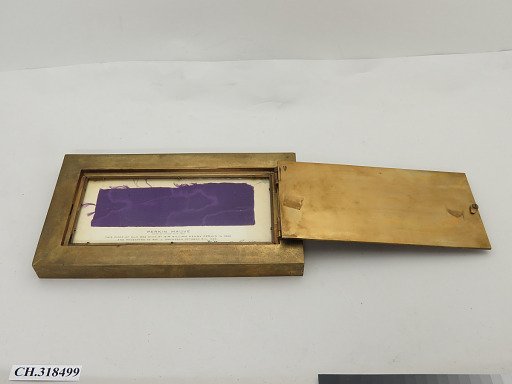
In 1856, while studying at the Royal College of Chemistry, William Henry Perkin spent his spring vacation in a crude laboratory in the attic of his house in East London. There he discovered that aniline, a colorless aromatic oil derived from coal tar, could be transformed into a black gunk that, when mixed with alcohol, would turn fabrics bright purple. With patent in hand, Perkin established the artificial dye industry. Wealth and honors followed soon thereafter. In 1906, while Perkins was in New York for a lavish celebration of the 50th anniversary of the coal tar industry, he visited William John Matheson, an American who imported artificial dyes and pigments, and probably gave him this memento at that time. Matheson gave this memento to the Smithsonian in 1928.
National Museum of American History’s own description