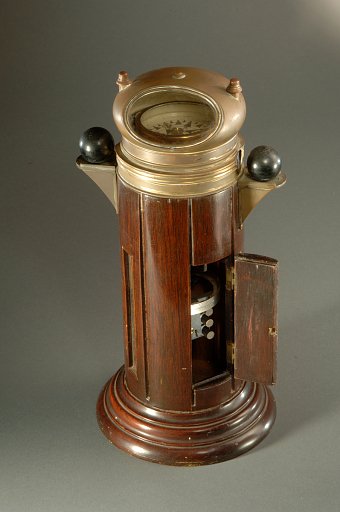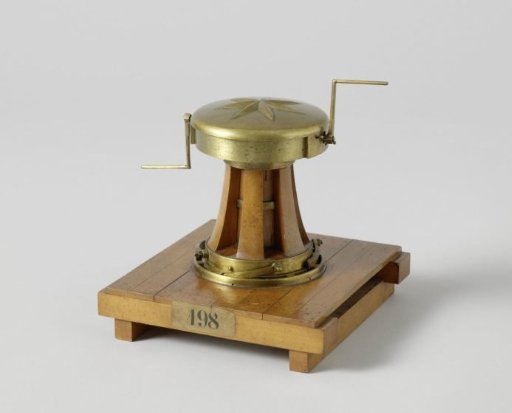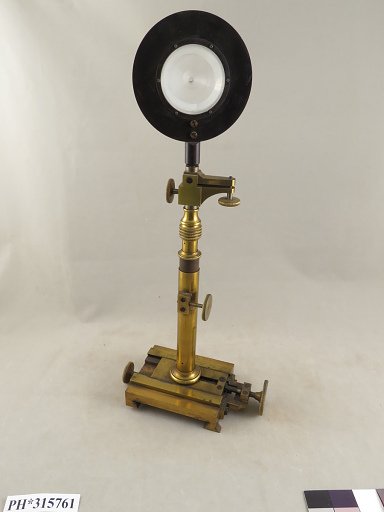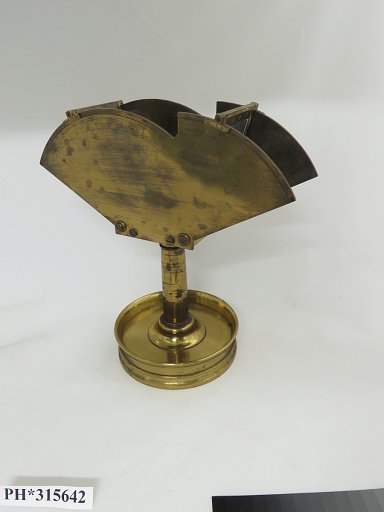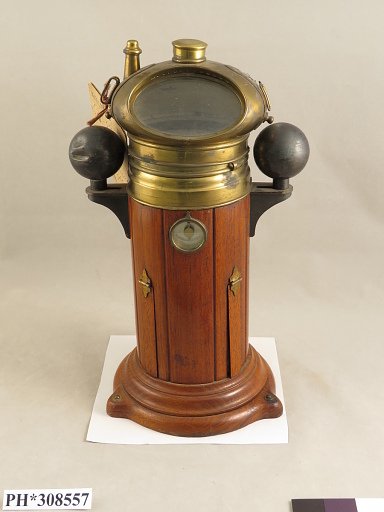
Dry Card Compass with Binnacle
From the collection of National Museum of American History. Free to download, adapt and use — no permission needed.
This is the model that accompanied William Thomson's 1880 application for an American patent for an improved mariner’s compass. The U.S. Patent Office transferred it to the Smithsonian in 1926. This compass has eight short magnetic needles suspended by threads. The card is relatively large, but its central part is cut away. The binnacle has large iron balls designed to compensate for the magnetism of the ship itself. Thomson claimed that his design offered five advantages: greater steadiness of the compass card and diminished wear of the bearings; greater steadiness of the compass in vessels of war during gun-fire; improved method of applying correctors for the semicircular error; improved auxiliary instruments to correct the heeling error; and improved compass card. The inscription reads "SIR WM THOMSON’S PATENT. J. WHITE, MAKER GLASGOW."
National Museum of American History’s own description