CC0 · no rights reserved
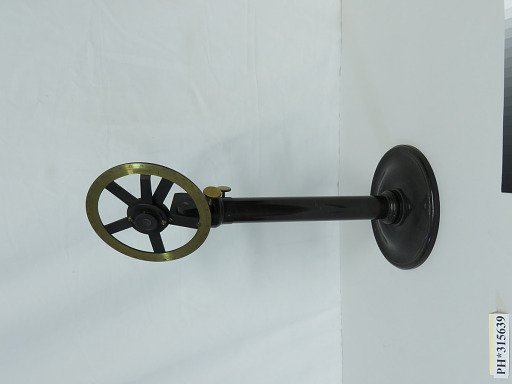
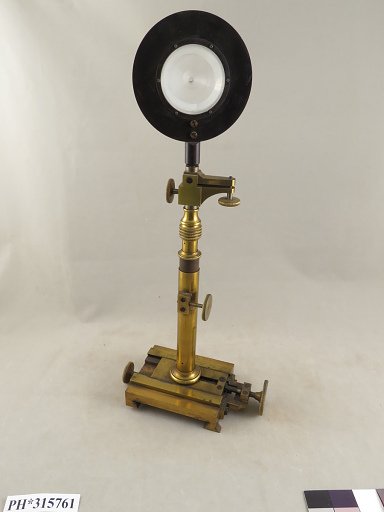
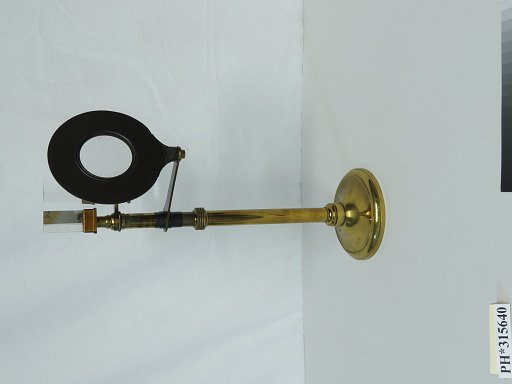
Stokes Apparatus
From the collection of National Museum of American History. Free to download, adapt and use — no permission needed.
About this work
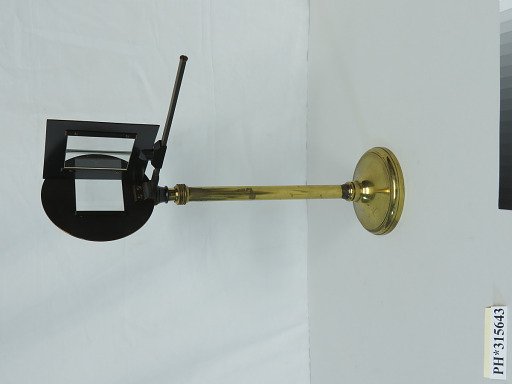
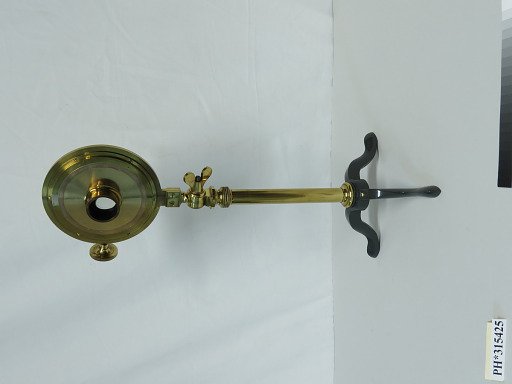
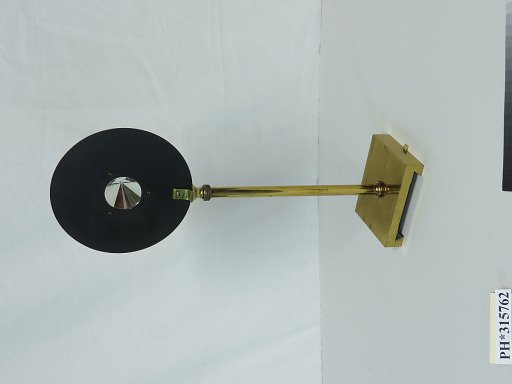
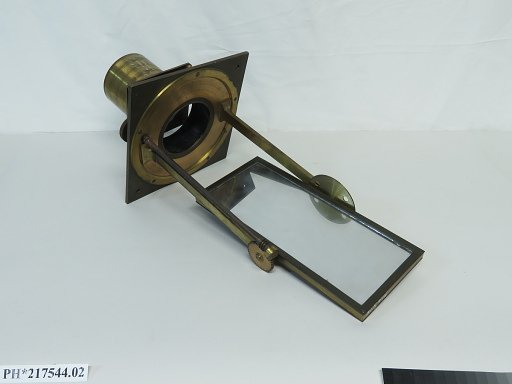
This instrument, consisting of two equilateral quartz glass prisms and a quartz lens on a metal stand, was designed to throw light of a particular wavelength onto a sample of some sort. The “DUBOSCQ / À PARIS” inscription is that of Jules Duboscq (1817-1886), the French instrument maker who termed it an apparatus for studying the phenomenon of fluorescence discovered by Stokes. George Gabriel Stokes, the Lucasian professor of mathematics at the University of Cambridge, published an important paper on fluorescence in 1852.
National Museum of American History’s own descriptionSubjects
Credit lineStokes Apparatus. National Museum of American History, U.S. Military Academy. CC0.