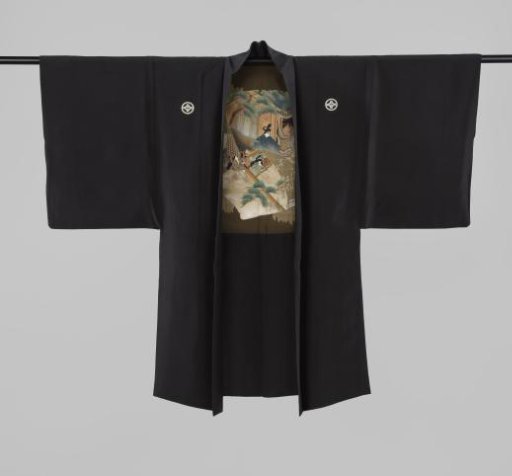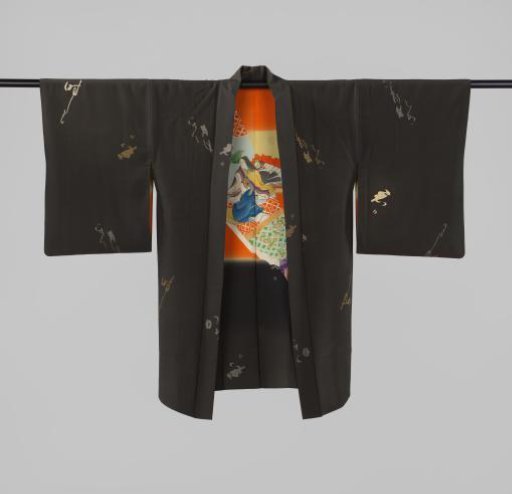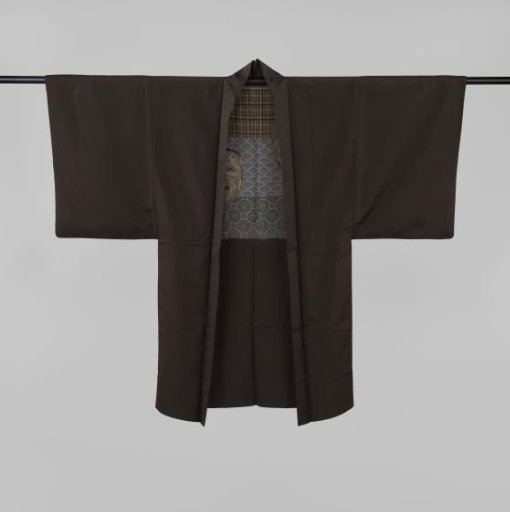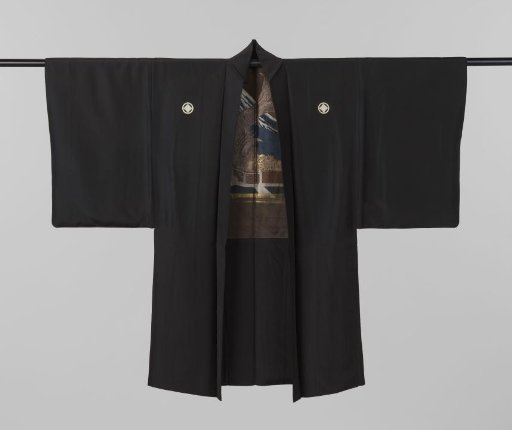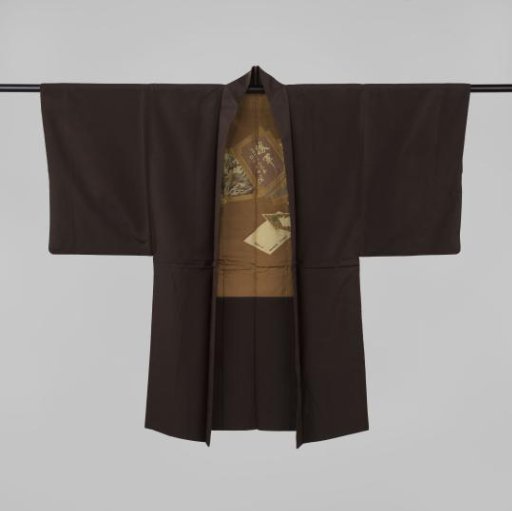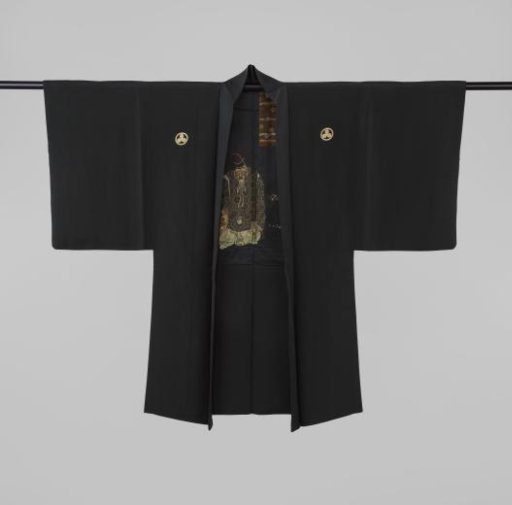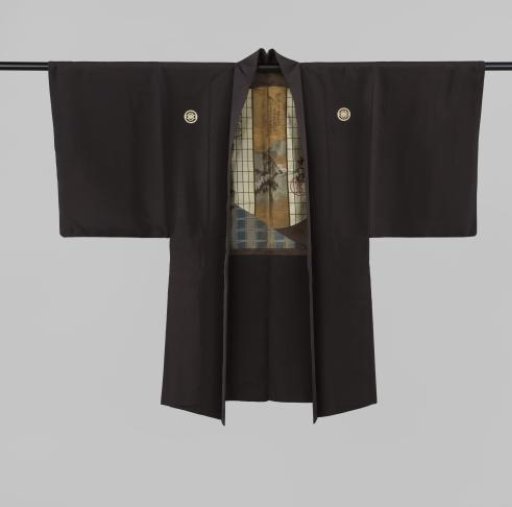
Men's haori with the hills near the Daikyoan temple
From the collection of Rijksmuseum, Amsterdam. Free to download, adapt and use — no permission needed.
Haori for a man with a lining decoration of a circular image of a hilly landscape with a calligraphed poem visible above it, seen between two sliding doors with calligraphy and a seal; in the lower left, a triangular panel with a diamond pattern features an image of a black tea bowl, and in the upper right, a tea scoop (chashaku) with its box. On the right sliding door: 'Takagamine Koetsu', seal 'Daikyoan'; on the left door: 'Konoe Ozan', signature (kao), possibly not by Ozan. The calligrapher Konoe Nobuhiro (1599–1649), priestly name Ozan, also skilled in poetry, the tea ceremony, and incense play, played an important role in the artistic life of the Imperial Court in the first half of the 17th century. He moved in the same circles as the calligrapher and potter Hon'ami Koetsu (1558–1637); the depicted tea bowl is in Koetsu's style and resembles the bowl 'Azuma'. The drawing on the bowl recalls the round hills of Takagamine, visible here through the open sliding doors of (presumably)
Rijksmuseum, Amsterdam’s own description