Public domain
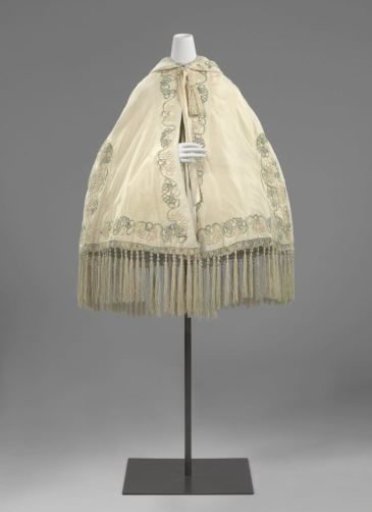
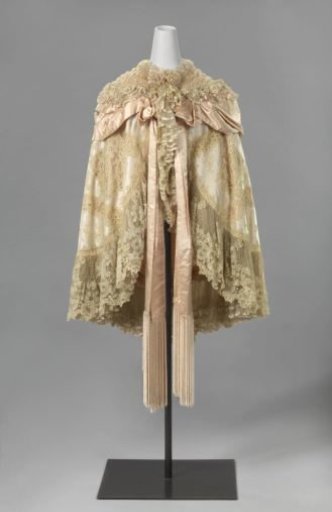
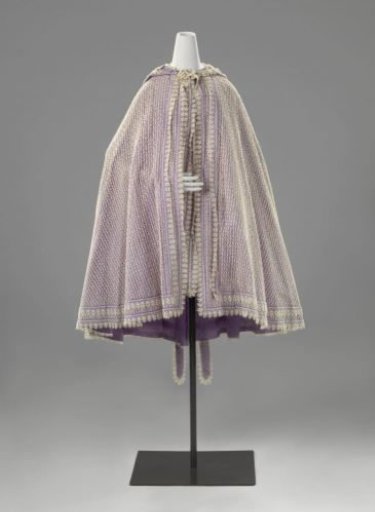
Cape (Talma) made of lace
From the collection of Rijksmuseum, Amsterdam. Free to download, adapt and use — no permission needed.
About this work
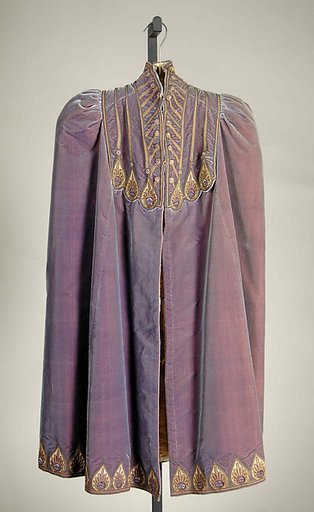
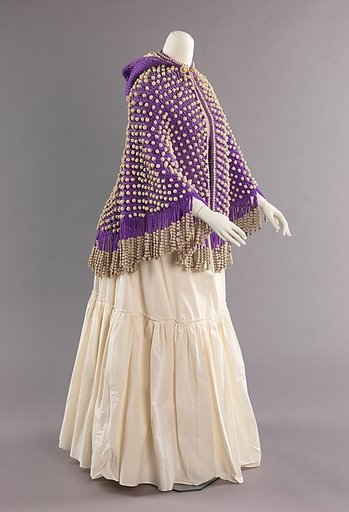
It was difficult to obtain bright purple with natural dyes. In 1856, English chemist W.H. Perkin accidentally discovered a synthetic purple pigment which became known as mauveine. This rich new purple caught on in the 1860s. And the relatively inexpensive industrial production made it accessible to a wide public.
Rijksmuseum, Amsterdam’s own descriptionSubjects
Credit lineCape (Talma) made of lace. c. 1860 - c. 1870. anonymous. Rijksmuseum, Amsterdam. Public domain.